
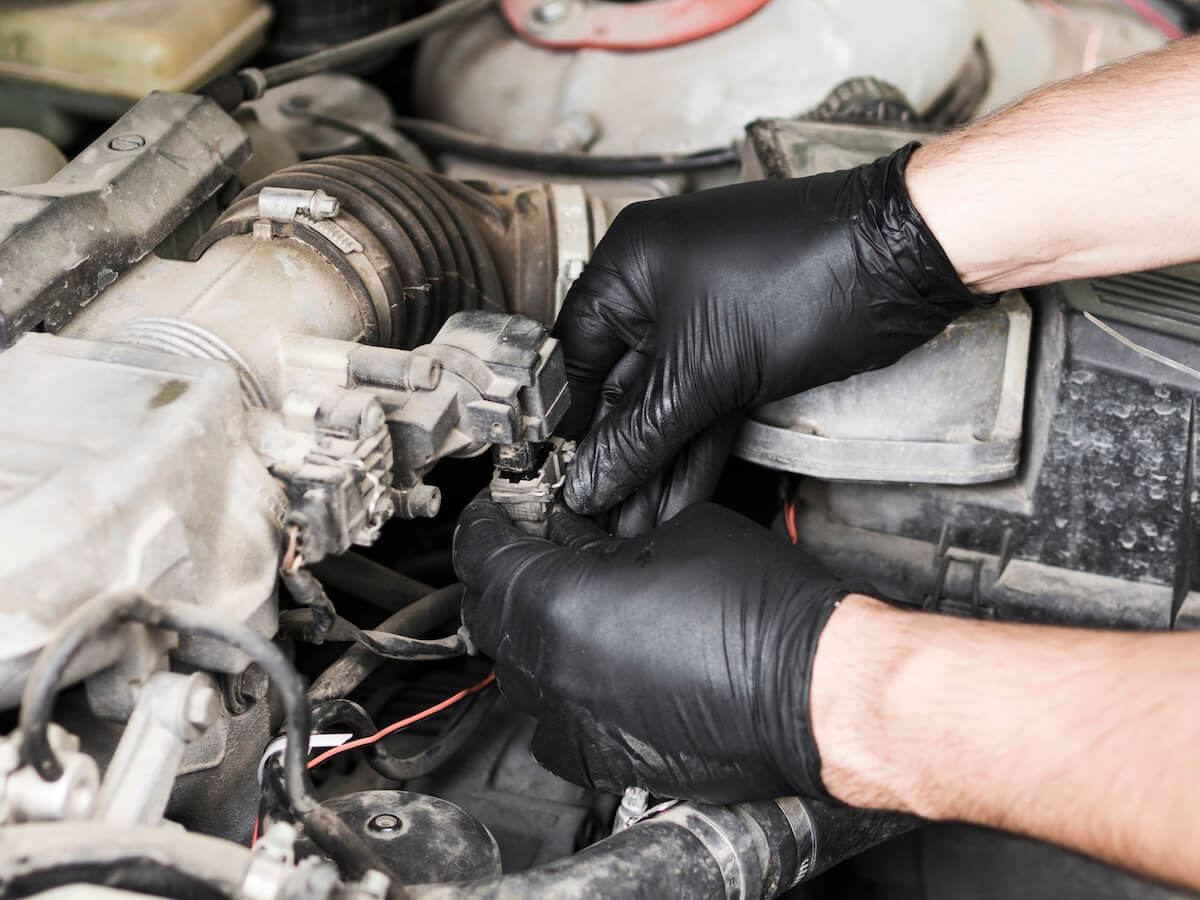
Keeping a car’s engine in good condition not only improves its performance, but also prolongs its service life and reduces pollutant emissions. One of the key processes to ensure good engine performance is internal decarbonize engine, which helps to remove carbon deposits that accumulate over time.
What does “decarbonizing an engine” mean?
Engine decarbonization is a cleaning process that removes carbon residues accumulated in the combustion system. With continued vehicle use, fuel combustion generates carbon residues that adhere to key components such as:
- Intake and exhaust valves.
- Fuel injectors.
- Pistons and cylinders.
- Intake manifolds.
- Filters and catalytic converters.
When carbon builds up, the engine loses efficiency, fuel consumption increases and pollutant emissions rise.
What is carbon and why does it form?
Carbon is a solid carbon residue that is generated by incomplete combustion of fuel in the engine. Its main causes include:
- Use of low quality fuels.
- Driving at low revolutions for long periods of time.
- Lack of maintenance and filter replacement.
- Dirty or defective injection system.
- Bad condition of spark plugs or injectors.
Modern diesel and gasoline engines, with technologies such as direct injection, are more efficient but also more prone to carbon buildup.
Symptoms and consequences of excess carbon deposits
An engine with excessive carbon deposits may show the following symptoms:
- Loss of power and reduced throttle response.
- Increased fuel consumption.
- Black or blue smoke in the exhaust.
- Unstable idling or combustion failure.
- Difficulty starting.
- Strange engine sounds.
If you notice any of these symptoms, it is likely that your engine needs internal decarbonization.
If not addressed in time, excessive carbon build-up can lead to:
- Increased wear of internal engine components.
- Clogged injectors, affecting combustion.
- Problems in the EGR valve and particulate filter.
- Increased pollution and CO₂ emissions.
- Costly repairs if the problem worsens.
Contact us!
Decarbonizing methods
There are several ways to remove carbon deposits from the engine, each with its own advantages and applications.
Decarbonization with hydrogen
This process uses oxyhydrogen gas to remove carbon deposits without disassembling the engine. The gas is introduced into the intake and, through a chemical reaction, dissolves the accumulated residues.
Advantages:
- No disassembly required.
- Fast (45-60 min) and efficient.
- Safe for the engine.
- Reduces emissions.
Decarbonization by additives
It consists of adding specific chemicals to the fuel or engine oil to dissolve carbon deposits.
Advantages:
- Economical and easy to apply.
- Partially reduces carbon deposits.
Disadvantages:
- Not as effective as hydrogen.
- It may take several applications to notice improvements.
Manual cleaning
The affected parts are disassembled and cleaned with chemicals or ultrasound.
Advantages:
- Deep cleaning.
- Guaranteed results.
Disadvantages:
- Costly and requires skilled labor.
- May take several hours.
When to decarbonize the engine?
Signs that indicate the need for cleaning
If you notice loss of power, increased consumption or excessive emissions, it is advisable to decarbonize as soon as possible.
Recommended frequency
Experts suggest decarbonization every year:
- 50,000 km for gasoline engines.
- 30,000 km in diesel engines.
- 20,000 km if you drive in the city or at low revs.
Advantages of decarbonizing the engine
Engine carbon buildup can affect engine performance, increase fuel consumption and lead to costly breakdowns. Decarbonization is a process that removes this debris and improves overall engine performance, providing multiple benefits in both the short and long term.
Increased power and torque
When carbon builds up on valves, injectors, pistons and the intake manifold, the engine loses efficiency, resulting in reduced power and slower throttle response.
- With decarbonization, the engine recovers its original performance, improving throttle response and torque.
- Combustion is optimized, allowing for greater power delivery and improved vehicle performance.
- Especially in turbocharged cars, carbon cleaning helps to keep the turbo in optimal condition.
Consumption reduction
A dirty engine needs more fuel to run properly. Carbon affects combustion efficiency, forcing the engine to compensate by burning more gasoline or diesel.
- Decarbonization allows the fuel-air mixture to be more efficient, reducing consumption by as much as 10-15% in some cases.
- Clean injectors atomize the fuel better, ensuring more efficient combustion.
- By reducing the engine’s internal resistance, it needs less effort to move, which translates into lower fuel consumption.
Reduced contamination
Engines with carbon buildup emit more pollutants, as combustion is not optimal and additional waste is generated.
- Decarbonization reduces emissions of:
- CO₂ (Carbon dioxide), decreasing the vehicle’s carbon footprint.
- NOx (Nitrogen oxides), responsible for air pollution.
- Soot particles, especially in diesel engines.
- A clean engine complies better with environmental regulations, which helps to pass inspections such as the MOT without problems.
Improved engine performance
- Decarbonization avoids these costly breakdowns and extends engine life.
- Preventive and corrective maintenance costs are reduced.
- A clean engine suffers less friction and wear, running more efficiently.
Contact us!
Decarbonization of vehicle fleets
Companies that manage vehicle fleets (cabs, goods transport, car rental, buses, company vehicles, etc.) can obtain significant benefits from regular decarbonization of their engines.
Why is it so important for fleets?
Fleet vehicles often travel long distances on a daily basis, often in demanding conditions such as heavy city traffic, frequent stops and driving at low engine speeds. These conditions favor the accumulation of carbon in the engine, which can lead to:
- Increased fuel consumption, resulting in extra expense for the company.
- Lower engine efficiency, affecting vehicle performance and response.
- More frequent breakdowns, increasing maintenance and repair costs.
- Higher pollutant emissions, which can affect sustainability and environmental regulations.
Benefits of decarbonization in fleets
- Reduced fuel consumption → A decarbonized fleet can save thousands of euros per year in fuel.
- Longer vehicle life → Less wear and tear on the engine and its components.
- Fewer breakdowns and maintenance → Reduced fleet operating costs.
- Compliance with environmental regulations → Reduction of CO₂ emissions and pollutants.
- Better performance and safety → More efficient and responsive vehicles on the road.
Recommended methods for fleets
Transportation and logistics companies can opt for fast and effective decarbonization methods, such as decarbonization with hydrogen, because:
- No engine disassembly required.
- It can be done in one hour without affecting the fleet’s operability.
- It is more economical and sustainable in the long term.
In addition, implementing preventive maintenance plans with periodic decarbonization can be an excellent strategy to optimize costs and improve the performance of the entire fleet.
Decarbonization in gasoline vs. diesel engines
Diesel engines tend to generate more carbon due to their combustion process, so they require more frequent decarbonizations compared to gasoline engines.
Diesel engines:
- Increased risk of carbon build-up, especially in systems with EGR valve and particulate filter (DPF).
- Combustion in diesels takes place at lower temperatures, which favors the formation of residues.
- Modern diesel vehicles with direct injection and turbochargers generate more carbon in the intake and exhaust system.
- They require more frequent decarbonization (approximately every 30,000 km).
Gasoline engines:
- They generate less carbon than diesel engines, but direct injection engines can suffer from deposits in the intake and valves.
- Combustion is cleaner, which reduces residue buildup, but does not completely eliminate it.
- On newer gasoline engines, carbon deposits can affect injector performance.
- Recommended frequency of decarbonization: every 50,000 km.
Which decarbonization method is best for which type of engine?
Diesel engines: Hydrogen decarbonization is the best option because it effectively cleans valves, manifolds, injectors and the particulate filter without disassembly.
Gasoline engines: They can also benefit from hydrogen decarbonization, but in some cases, supplementing with additives can help keep the system clean between deep cleanings.
Prolong the life of your car with decarbonization!
Internal engine decarbonization is essential maintenance to improve vehicle performance, reduce fuel consumption and extend engine life. With modern methods such as hydrogen decarbonization, carbon can be removed quickly, safely and effectively.
If you want your car to run like new and avoid future problems, don’t wait any longer and consider decarbonizing your engine – your car and your wallet will thank you!