
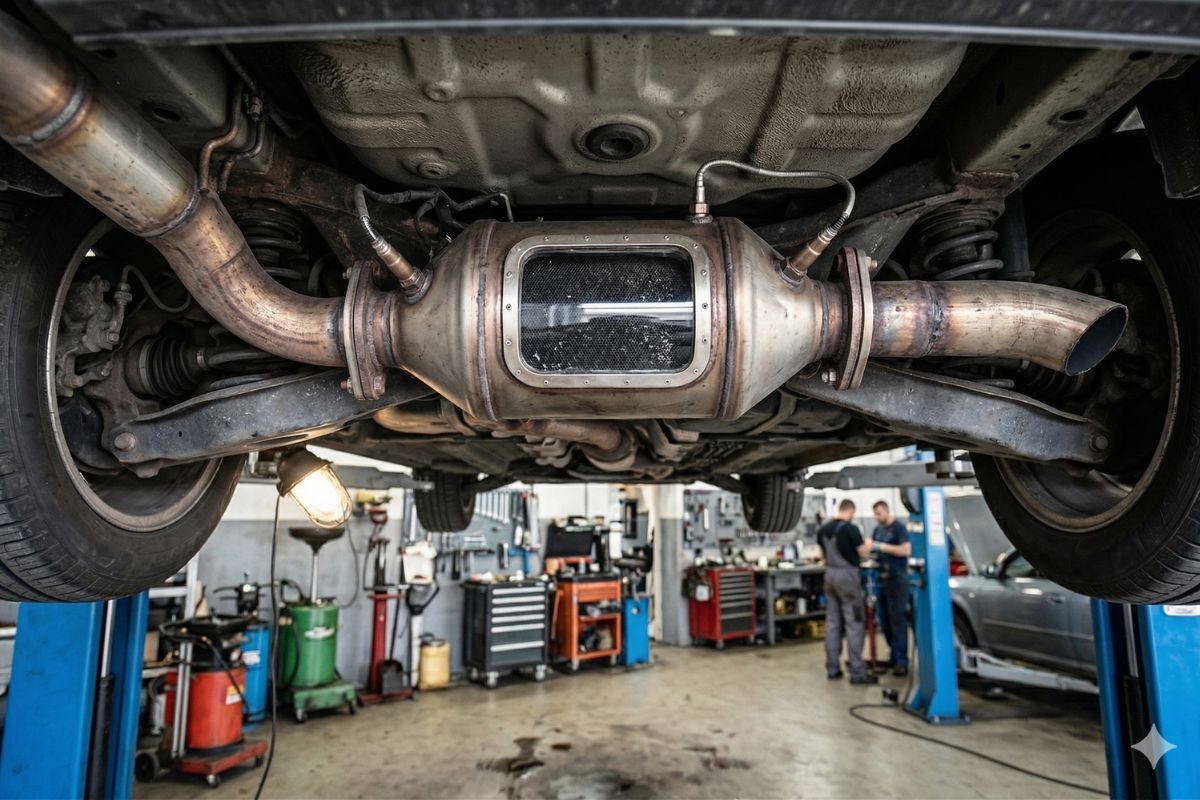
Yes, it is possible to drive for a while with a blocked diesel particulate filter, but it is not recommended. A defective FAP or DPF can cause a loss of power, increased fuel consumption, damage to the turbocharger, and serious engine problems if not addressed in time.
For repair shops, quickly detecting a blocked diesel particulate filter and applying the appropriate solution helps avoid more costly repairs and improves vehicle performance.
What is a particulate filter and how does it work?
The diesel particulate filter (DPF) is a component of the exhaust system that traps solid particles generated during diesel engine combustion.
Its main function is to reduce pollutant emissions and comply with current environmental regulations.
The filter consists of a ceramic structure that acts as a high-temperature filtration system.
Its operation is based on three processes:
- Capturing soot particles.
- Accumulation of residue in the filter.
- Periodic removal through regeneration.
If this process is not performed correctly, the filter begins to become saturated until it is clogged.
What happens if you drive with a clogged particulate filter?
Driving with a clogged filter creates higher backpressure in the exhaust system.
This makes it harder for the engine to expel exhaust gases, which directly affects the vehicle’s performance.
Over time, more serious mechanical problems may arise if the issue is not resolved.
Symptoms of a Clogged Particulate Filter
A clogged DPF usually shows several clear signs that repair shops can easily identify.
Particulate Filter Warning Light
One of the first signs is the particulate filter warning light coming on in the instrument cluster. This warning indicates that the system has detected high saturation and needs to perform a regeneration. If the warning persists, it is advisable to have the vehicle diagnosed at a repair shop.
Loss of engine power
When the filter is clogged, gas flow is reduced and the engine loses power.
This can result in:
- slower acceleration
- difficulty maintaining speed
- Enabling emergency mode
Difficulty reaching high revolutions per minute (RPM)
A saturated DPF can limit engine RPM. Many vehicles automatically reduce maximum RPM to protect the exhaust system.
Black smoke or excessive smoke
Although the DPF is designed to trap particles, when the system fails, dark smoke may appear in the exhaust due to incomplete combustion.
Increased fuel consumption
When the filter is clogged, the engine has to work harder to expel exhaust gases. This leads to increased fuel consumption.
Fuel odor in the cabin
In some cases, a blocked diesel particulate filter exhaust system can cause a smell of fuel or exhaust fumes to enter the vehicle’s interior. This symptom should be checked immediately.
Consequences of driving with a blocked diesel particulate filter
Driving for an extended period with a blocked diesel particulate filter can cause significant problems with the vehicle.
Risk of additional engine damage
Excess backpressure in the exhaust system can affect other components such as:
- the turbocharger
- the EGR valve
- the fuel injectors
- the combustion system
If left unresolved, the repair could end up being much more expensive.
Problems with the vehicle inspection
A vehicle with a faulty emissions control system may fail the vehicle emissions test (ITV).
This happens when emissions exceed the permitted limits.
Penalties for violating emissions regulations
Driving with a tampered or defective emissions control system may result in penalties in some cases, especially if the filter has been disabled.
How to fix a clogged DPF?
There are several solutions depending on the filter’s level of saturation.
Particulate filter regeneration
When the saturation level is moderate, the system can perform an automatic regeneration to remove accumulated particles. A forced regeneration can also be performed at a service center using diagnostic equipment.
Professional DPF Cleaning
When regeneration is not sufficient, a professional DPF cleaning can restore its function.
This process allows for:
- remove accumulated soot
- restore gas flow
- avoid replacing the filter
For many repair shops, this service has become an increasingly sought-after solution.
Particulate filter replacement
Replacement is usually necessary when:
- the filter is cracked
- the ceramic structure is damaged
- there is internal melting of the filter material
In these cases, it is not possible to restore the filter by cleaning it.
Why is it better to clean the DPF than to bypass it?
Bypassing the particulate filter may seem like a quick fix, but it has several drawbacks.
Compliance with emissions regulations
The DPF is part of the mandatory anti-pollution system in modern vehicles. Removing it can lead to legal problems and difficulties passing the vehicle inspection.
Preventing damage to the engine and other components
Maintaining the vehicle’s original system helps protect:
- the engine
- the turbo
- the exhaust system
Proper cleaning is usually a much safer alternative.
How much does it cost to repair or replace a particulate filter?
The cost of repair or replacement may vary depending on:
- the vehicle model
- the size of the filter
- the type of engine
For this reason, many drivers first opt for solutions such as cleaning the filter before replacing it.
How to prevent DPF clogging during daily driving
Proper maintenance helps reduce the risk of filter clogging.
Drive long distances on the highway
Driving at a constant speed for a few minutes allows the filter to reach the temperature needed for regeneration.
Use high-quality fuel
Using high-quality fuel can improve combustion and reduce particle generation.
Regular vehicle maintenance
Proper engine maintenance helps prevent problems with the emissions control system.
It is recommended to periodically check:
- injection system
- EGR valve
- system sensors
Don’t put your vehicle’s performance at risk!
Driving with a blocked diesel particulate filter can cause significant mechanical problems if not addressed in time.
Detecting symptoms early and implementing solutions such as regeneration or professional cleaning can prevent further damage and keep the vehicle running properly.
For repair shops, offering specialized DPF diagnostic and cleaning services has become an increasingly important opportunity.
At Oxyhtech, we help workshops implement professional solutions for cleaning particulate filters using equipment specifically designed for this type of work.
Would you like to introduce or improve your workshop’s DPF cleaning service? Contact us and discover how to boost your service’s profitability and diagnostic capabilities.
Frequently Asked Questions About the Particulate Filter
A workshop diagnosis allows you to check the filter’s condition using differential pressure readings, regeneration cycles, and error codes.
A blocked diesel particulate filter filter can cause a loss of power, increased fuel consumption, and damage to other engine components.
The filter’s service life typically exceeds200,000 km if the system is functioning properly and is maintained correctly.