
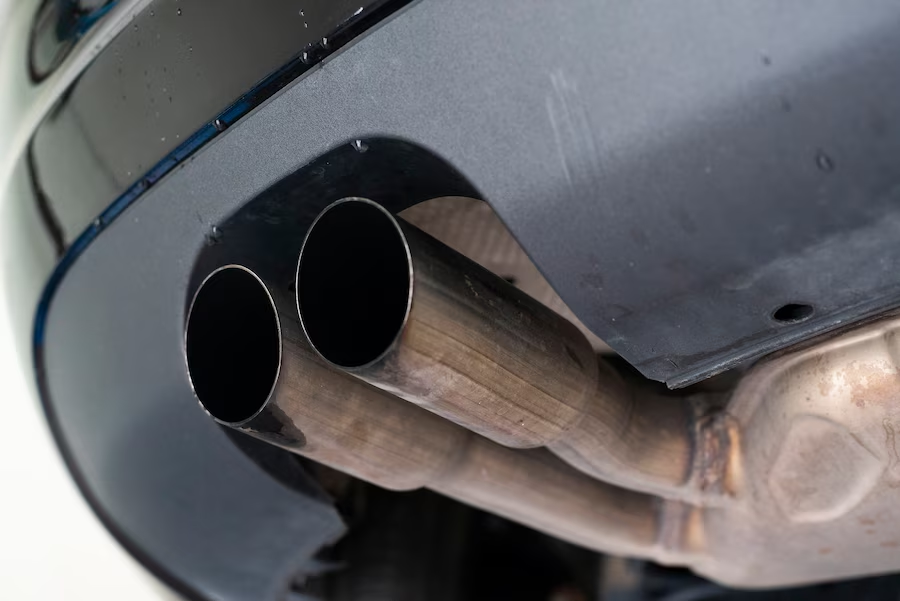
What is “Force PDF regeneration”?
Forced regeneration of the particulate filter is a procedure that is performed when the particulate filter is clogged and cannot be regenerated automatically through passive or active methods. This process is intended to clean the DPF and prevent exhaust system failures from occurring. When the particulate filter is too dirty, a controlled process is used in a specialized workshop, in which heat and other methods are applied to burn off the soot accumulated in the filter. Forcing regeneration is an option when the vehicle cannot perform regeneration autonomously due to non-ideal driving conditions or a failure of the regeneration system. To ensure efficient regeneration, we recommend our DPF cleaning fluids that facilitate the removal of accumulated soot and help restore the performance of the particulate filter.How is the particulate filter cleaned?
Particulate filter cleaning is crucial to maintain engine performance and meet emission regulations. Cleaning can be performed through various methods, depending on the severity of the clogging and the type of vehicle.Filter regeneration: how does it occur?
Regeneration of the particulate filter occurs when the filter is heated sufficiently to burn off the accumulated soot particles. This process can be passive, active or forced, and each is activated depending on vehicle conditions:- Passive regeneration: Occurs automatically when the vehicle circulates at high temperatures, generally on long trips.
- Active Regeneration: It is activated by the car’s system when it detects a filter blockage. In this case, the exhaust gas temperature is increased to burn the particles.
- Forced regeneration: When passive and active regeneration are not sufficient, forced regeneration is used in a specialized workshop.
The 3 ways to clean a particulate filter
- Ultrasonic Cleaning: Uses ultrasonic waves to thoroughly remove particles trapped in the filter.
- Treatment with Cleaning Liquids: Specific liquids dissolve the accumulated soot, facilitating its elimination.
- Use of Chemical Additives: Additives help reduce particulate build-up and promote filter regeneration.
Contact us
How can I force PDF regeneration of a diesel car?
There are several ways to regenerate the particulate filter of a diesel car. Under normal conditions, the passive or active regeneration system is automatically activated, but if the filter is heavily clogged, it may be necessary to force the regeneration of the particulate filter. One of the most common ways to force the regeneration of the particulate filter is by using specialized equipment that raises the temperature of the exhaust gases or injects liquids and additives to clean the filter. In addition, some vehicles allow a regeneration function to be activated manually via the on-board computer, but in more serious cases, it is best to take the car to a specialized workshop.Methods to Force PDF regeneration
There are several methods that car workshops use to regenerate the particulate filter and ensure its performance:- Active Regeneration: Uses extra fuel injection to increase the exhaust gas temperature.
- Mechanical Cleaning: In some cases, physical cleaning with high pressure or ultrasonic equipment can be used to remove soot.
- Forced Regeneration with Specialized Equipment: It is performed in the workshop using advanced equipment that increases the filter temperature and burns the trapped particles.
Particulate filter failures
The particulate filter can suffer from a variety of problems if not properly maintained:- Filter clogging: When the DPF becomes clogged, the exhaust system cannot function properly, which can affect engine performance.
- Differential pressure sensor failure: If this sensor is not working properly, the filter clogging level cannot be detected.
- DPF cracking or cracking: The particulate filter may crack due to excessive heat or the use of inappropriate products for regeneration.
Causes of particulate filter regeneration failure
Several factors can affect the regeneration of the particulate filter and cause failures in the process:- Use of low quality fuels: Poor quality fuels can produce more soot and make regeneration more difficult.
- Driving mainly short distances: Vehicles that are not driven frequently at high temperatures are more likely to clog the DPF.
- Failures in the fuel injection system: If the injection system is not working properly, the necessary conditions for regeneration cannot be generated.
Tips to improve particulate filter health
To extend the life of the particulate filter and improve its performance, it is important to follow some recommendations:- Take long trips on a regular basis: This helps to reach the high temperatures necessary for the system to activate passive regeneration.
- Use quality products to clean the DPF: Specialized fluids and additives help keep the filter in good condition.
- Replace the filter when necessary: If the filter is damaged or has reached its maximum particle accumulation capacity, replacing it is the most appropriate option.