
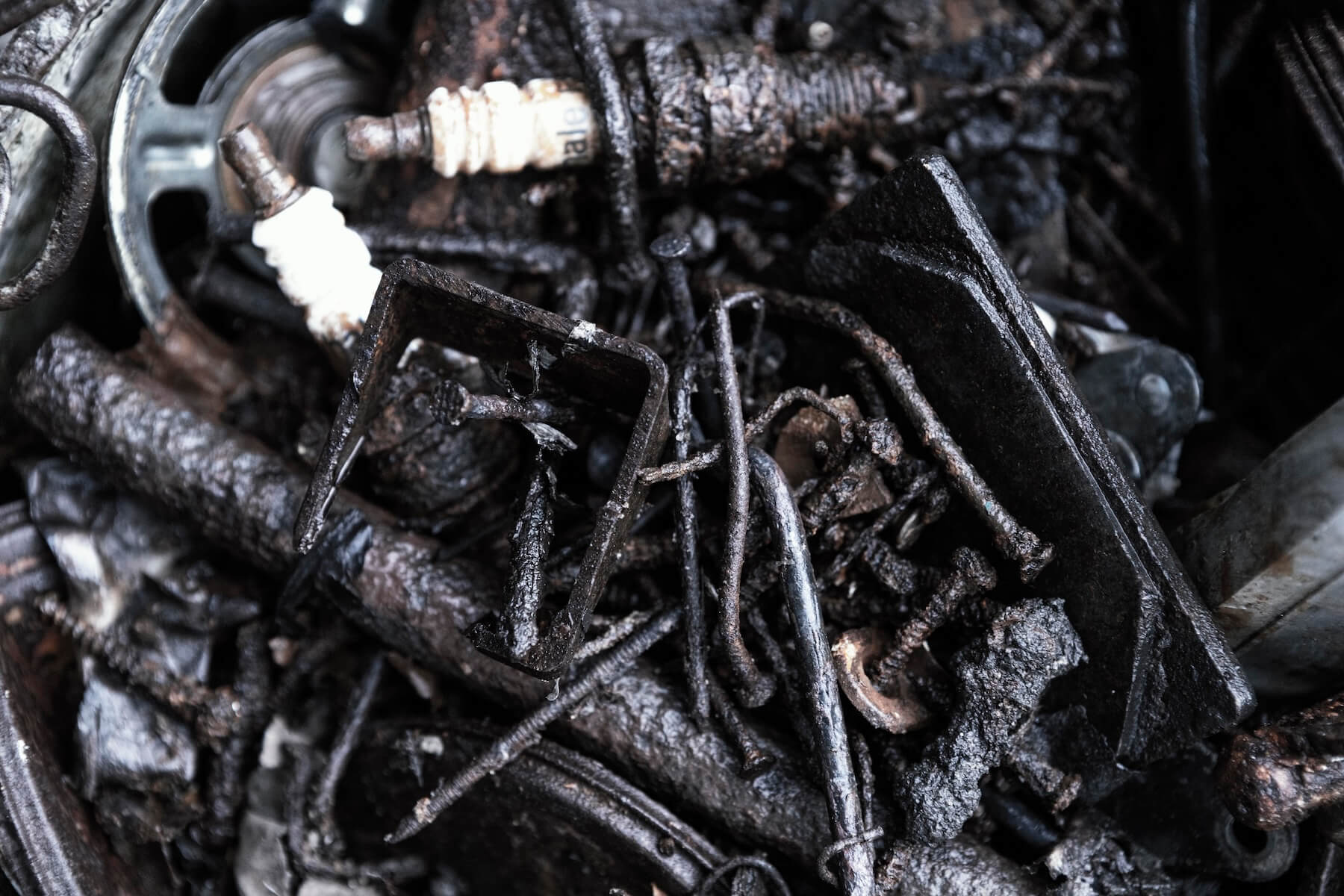
Carbon build-up in the car: Causes, symptoms and solutions

Aya Benhalou
Aya Benhalou
<  BACK
Carbon deposits are one of the main enemies of engine performance. It accumulates little by little and, when not removed in time, can cause serious failures, increased consumption and emissions, loss of power or even engine failure.In both diesel and gasoline cars, the presence of carbon deposits is becoming more and more common due to modern anti-pollution systems. At Oxyhtech, we explain what exactly carbon deposits are, why they appear, how to identify their symptoms and, above all, how to remove them with effective, fast solutions without disassembly.

What is carbon deposits in the engine?

Carbon deposits are the result of incomplete combustion. It is formed by solid particles of unburned carbon, which adhere in critical areas of the engine such as:
  • Admission.
  • EGR valve.
  • Injectors.
  • Combustion chamber.
  • Turbo.
  • Particulate filter (FAP or DPF).
Over time, these particles generate a solid, sticky layer that obstructs the passage of air, reduces combustion efficiency and compromises engine performance.

Causes of carbon build-up

There are multiple factors that favor the appearance of carbon deposits in the car:
  • Driving at low revolutions (urban routes, traffic lights, traffic).
  • Frequent cold starts.
  • Low quality or contaminated fuel.
  • Failures in EGR, injectors or turbo.
  • Lack of preventive maintenance.
  • Unsuitable or bad motor oil.
These factors cause the engine to operate outside its optimum temperature or pressure range, preventing complete combustion.

Symptoms of carbon deposits in your car engine

Detecting the symptoms of accumulated carbon build-up early can prevent a costly breakdown. The most frequent are:
  • Black or bluish smoke from the exhaust.
  • Loss of power or irregular acceleration.
  • Vibrations or jerks at idle.
  • Motor failure light on.
  • Sudden increase in fuel consumption.
  • Metallic noise or knocking in the engine.
  • Difficulty to pass the ITV due to emissions.

What happens inside the engine when carbon deposits appear?

Carbon buildup completely alters the internal workings of the engine. This is what happens:
  • Less oxygen in the mixture due to intake blockage.
  • Incomplete opening of the EGR valve, causing inefficient recirculation.
  • Partial blockage of the injectors, altering fuel atomization.
  • Limited or blocked turbo, due to carbon deposits in the variable geometry.
  • Poor combustion, which generates even more soot.
  • Risk of self-ignition or detonation, especially in gasoline engines with high compression.
All this generates a vicious circle of more carbon, more failure and less performance.

Breakdowns that can occur due to the appearance of carbon deposits

If not dealt with in time, carbon deposits can lead to serious malfunctions:
  • Turbo breakage due to soot accumulation in the variable geometry.
  • Total EGR blockage.
  • Damage to the injectors, affecting the mixture and combustion.
  • DPF collapse, which prevents regeneration.
  • Knocks on the connecting rod due to irregular detonations in the chamber.
  • Safe mode switch-on at the control panel.
  • Expensive repairs: between €600 and €2,500 if parts and labor are involved.

How to remove carbon from the car: the process of decarbonizing the engine

To remove carbon deposits safely and effectively, the recommended process is decarbonization with HHO (oxyhydrogen).

How does it work?

  1. The machine is connected to the vehicle’s intake.
  2. HHO gas (hydrogen + oxygen) generated by electrolysis is introduced.
  3. The idling engine mixes HHO with air and fuel.
  4. The temperature generated in the chamber eliminates the existing carbon.
  5. In 30-40 minutes, the motor recovers efficiency and internal cleanliness.
This service is totally disassembly-free, chemical-free and without risk to the engine.
Oxyhtech NOVA and ULTRA HHO decarbonizers

Tips to prevent carbon build-up

  • Drive at medium-high speed once a week (3,000 rpm for 15 min).
  • Use quality fuel and professional additives.
  • Perform preventive cleaning every 20,000-30,000 km.
  • Keep the EGR valve clean with specific products.
  • Always use approved oil compatible with your engine.
  • Check the condition of the air filter periodically.
  • Make preventive diagnostics with your trusted workshop.

Tips to remove carbon deposits from the engine

In addition to professional decarbonizations, there are complementary techniques:
  • Fuel additives: help to keep the system clean, but their action is limited against hard carbon.
  • Cleaning by hydronebulization: allows cleaning of EGR valve and intake without disassembly. Ideal in combination with HHO.
  • Controlled accelerations on the road: useful as preventive support.
  • Cleaning combined with OBD diagnostics: allows to verify immediate improvements.
Important: do not perform home decarbonization without professional equipment. Incorrect use can damage the engine.

Intelligent maintenance avoids expensive breakdowns

Carbon deposits are not an unavoidable problem. With the right tools and a technical maintenance plan, you can avoid it, eliminate it and prevent its consequences.The most effective, fast and professional solution is oxyhydrogen decarbonization, as offered by Oxyhtech equipment. In just 30 minutes, your workshop can restore engine performance without disassembly, without residues and with visible benefits from the very first moment.Do you have a workshop and want to offer professional carbon cleaning without disassembly? Do it with Oxyhtech technology: Oxyhtech NOVA and ULTRA.Turns carbon cleaning into a technical, cost-effective and loyalty-building service.
Contact us!

What happens if there is carbon in the motor?

The presence of carbon deposits in the engine, whether in diesel or gasoline engines, can cause a number of problems. Accumulated carbon can clog essential components, reducing engine efficiency and increasing fuel consumption. In addition, it can cause car faults, such as loss of power and erratic operation. It is crucial to keep the engine clean to avoid these issues and ensure optimum vehicle performance.

How do I know if my car requires decarbonization?

To find out if your car requires decarbonization, pay attention to the symptoms of carbon build-up in the engine. These include loss of power, increased fuel consumption, black smoke in the exhaust and engine misfiring. In both diesel and gasoline engines, these signs indicate the need for carbon cleaning.

How long does it take to decarbonize a car?

The process of decarbonizing a car can vary depending on the type of engine, whether diesel or gasoline, and the level of accumulated carbon. Generally, this procedure can take between 1 and 3 hours. However, it is important to have a professional evaluate the condition of the engine to determine the exact time required.

Contact Us

Request Information or a Demonstration

Do you want to incorporate the best workshop equipment?
Contact us and discover how our technology can transform your business.

Vector (2)

Phone: +34 948 59 74 49

Vector (3)

Location: Polígono Industrial Noáin Esquíroz, Calle J, Nº 2, 31191 Esquíroz, Navarra (España)

    Contact Form

    Leave us your details and you will receive all the information.


    ⚡ REQUEST OFFER ⚡