Why is it important to keep the car engine clean?
A clean engine allows:- Detect leaks or visual faults more easily.
- Avoid overheating caused by dirt accumulation.
- Improve heat dissipation.
- Reduce premature wear of components.
- Convey confidence to the customer, especially in after-sales services or visual inspections.
- Comply with inspections (MOT) that detect external anomalies or excess emissions.
Types of car engine cleaning products
Degreasers and cleaners for engines.
Ideal for cleaning the outside of the engine block, cables, hoses and covers. They are available in liquid, active foam or spray format. They can be used to remove grease, oil, mud and accumulated dust. There are ecological and biodegradable versions, which is recommended for workshops committed to the environment.When to use them?- After a repair with oil leakage.
- In visual preventive maintenance.
- To improve the vehicle’s image in the eyes of the customer.
Engine protectors and polishes
After an external cleaning, products that repel dust, humidity and dirt can be applied. They usually leave a shiny finish on plastics and rubbers in the engine compartment. Some also have dielectric properties to protect electrical components.Advantages:- Improve engine aesthetics.
- Protect electrical connections from moisture.
- Facilitate future cleaning.
Engine decarbonizing machines
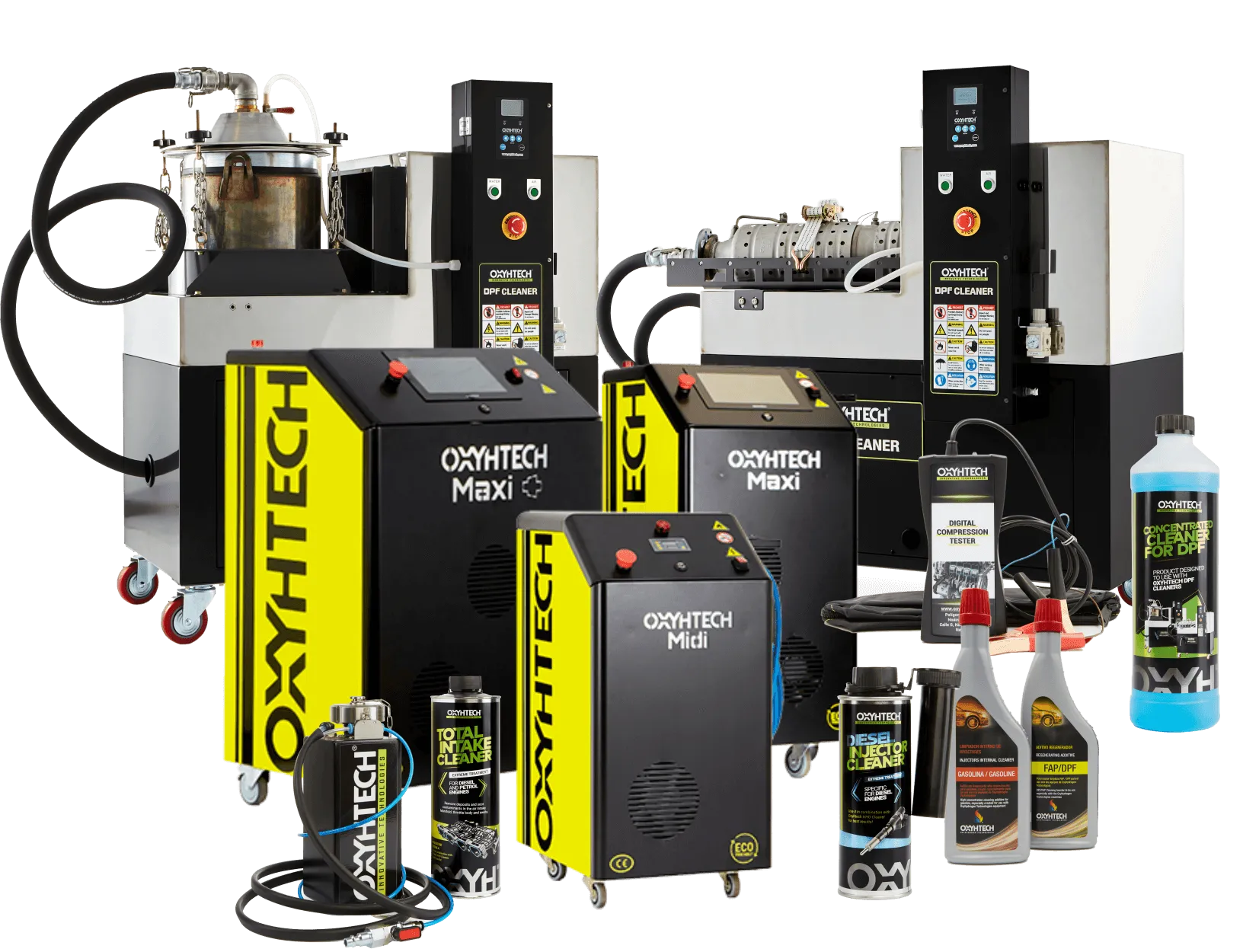
These solutions are key in internal engine cleaning, i.e. where residues directly affect performance. Oxyhtech NOVA and Oxyhtech ULTRA decarbonizers use oxyhydrogen (HHO) to remove carbon from combustion chamber, valves, turbo and DPF, without disassembly and in as little as 30 minutes.Advantages for the workshop:- Cost-effective and fast service.
- Immediate improvement of engine performance.
- Customer loyalty by avoiding costly repairs.
Common cleaning methods for the engine
- External cleaning
- Application of degreaser (alkaline or neutral).
- Gentle brushing or use of brushes for difficult areas.
- Rinsing with low pressure water or damp cloth.
- Drying with air or microfiber cloth.
- Steam cleaning:
- Chemical-free alternative.
- Uses pressurized steam to remove grease and dust.
- Ideal for delicate components or electric cars.
- Requires specific machine.
- Internal cleaning: decarbonization:
- Disconnection and connection of hoses to the intake.
- Activation of the HHO system with Oxyhtech NOVA or ULTRA.
- Running the engine for 30 minutes.
- Post-cleaning check (OBD or road test).
- Intake hydrofogging:
- Use of products such as Total Intake Cleaner.
- A fine mist is introduced with a specific product that acts on EGR valve, manifold and intake system.
- No disassembly or invasive intervention is required.
How to choose the right product to clean the engine
Alkaline vs. neutral cleaners
- Alkaline: More effective against stubborn grease. Require immediate rinsing and caution in sensitive areas.
- Neutral: milder, recommended for regular cleaning or delicate surfaces (rubber, sensors).
- Choose according to the level of dirt, type of vehicle and components to be treated.
Products for hybrid or electric motors
- Avoid water and conductive products.
- Use dielectric or dry cleaners.
- Protect batteries, inverters and high voltage wiring.
- Always consult the manufacturer’s specifications and apply safety disconnection protocols.
Benefits of regular engine cleaning
- Reduces fuel consumption.
- Improves engine response.
- Extends the service life of the intake system, injectors, turbo and EGR.
- Prevents costly failures.
- Increases customer satisfaction.
- Facilitates inspection and diagnosis.
- Improves the professional image of the workshop.
Safety measures during motor cleaning
- Work with a cold engine (especially for external cleaning).
- Use gloves, goggles and mask if the product requires it.
- Disconnect battery if there is risk of short circuit.
- Do not apply on alternators, switchboards or unprotected sensors.
- Ventilate the area well if chemical products are used.
- Always follow the product manufacturer’s instructions.
Tips for keeping the motor clean in the long term
- Perform external cleaning every 6-8 months.
- Offer decarbonization every 20,000-30,000 km.
- Use specific products for each type of engine.
- Educate the customer on good driving habits (avoid constant city driving, long journeys).
- Include visual inspection of the engine in periodic maintenance.
- Promote internal + external cleaning packs as combined services.