
How DPF delete affects your vehicle emissions

Aya Benhalou
Aya Benhalou
<  BACK
The diesel particulate filter (DPF) is a key component in the emission control system of modern diesel vehicles. Its purpose is to reduce the amount of particulate pollutants expelled from the exhaust. However, its maintenance is often ignored or misunderstood, which has led many owners and workshops to consider “DPF delete” as a quick fix.But… is it really a good idea? At Oxyhtech we take a look at what DPF delete is, how it is performed, what technical, legal and environmental consequences it can have, and what safe and professional alternatives exist to keep the system working properly.

What is DPF delete?

The term “DPF delete” refers to the physical and/or electronic removal of a vehicle’s diesel particulate filter. It is an illegal practice in many countries, including Spain, but is still common in some environments due to lack of information or an attempt to avoid recurring problems with the DPF.

What is the Diesel Particulate Filter (DPF) and what is it for?

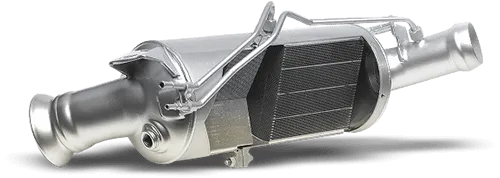
The DPF (Diesel Particulate Filter) is a device located in the exhaust system whose function is to trap soot and particles generated during diesel combustion. This soot accumulates over time and is removed by regeneration processes, thus keeping pollutant emissions low.

How does DPF delete work?

DPF delete process

It consists of removing the filter from the exhaust system and replacing it with a straight pipe or a modified section. Sometimes, the inner ceramic contents of the filter are simply emptied, leaving the outside intact.

Vehicle software changes

Once physically removed, the vehicle’s ECU needs to be reprogrammed to disable the differential pressure sensors, exhaust gas temperature and regeneration cycles. This is done with modified engine management software.

Why is DPF delete useful?

  • Improved performance in some cases (less gas restriction).
  • Savings in maintenance costs if the DPF is damaged.
  • Avoids failures related to filter saturation.
However, the associated risks far outweigh these benefits.

Risks and consequences of DPF deletion

Impact on pollutant emissions

When the filter is removed, the vehicle expels a large amount of solid particles into the environment, especially PM10 and PM2.5, which are highly harmful to human health. The car pollutes much more than allowed by regulations.

Legal problems and fines

  • The DPF is mandatory by law in all vehicles that have it as standard.
  • Removing it means illegal modification of the exhaust system.
  • Penalties in Spain can exceed 3,000 €, both for the workshop and the owner.
  • You will not pass the ITV if the technician detects the manipulation, even if there is no error in the control unit.

Effects on the vehicle warranty

  • Removing the DPF voids the official manufacturer’s warranty.
  • The vehicle’s emissions approval is also lost, which may invalidate the insurance or the professional use of the vehicle.

Alternatives to DPF delete

Instead of removing the filter, there are legal, effective and sustainable options to solve DPF saturation or failure problems:

Proper DPF maintenance

  • Driving at medium-high engine speeds on a regular basis.
  • Use of approved low ash oils (ACEA C1-C3).
  • Preventive diagnostics with OBD tool.

Cleaning and regeneration options

  • Forced active regeneration in workshop.
  • Cleaning with specific chemical products.
  • Professional cleaning with machines, such as those from Oxyhtech.
These solutions make it possible to restore DPF operation without breaking the law and with proven results.
See Oxyhtech DPF cleaning machines

Spanish regulations on vehicle emissions

In Spain, Royal Decree 920/2017 and the European Euro 5/6 regulations require the mandatory use of the DPF in modern diesel vehicles. Tampering with or overriding this component is punishable by:
  • Ministry of Industry.
  • ITV.
  • Guardia Civil de Tráfico.
  • Tax Agency (in company vehicles).

ITV and DPF: what you should know

The Technical Vehicle Inspection can detect the absence of DPF, even if there is no electronic failure. Opacity tests and visual inspection are applied. The cancellation of the filter may imply an immediate rejection, forcing to restore the original system to return to circulate legally.

Conclusion: solutions yes, traps no

DPF delete is not a professional, technical or legal solution. Although it may seem a quick way to eliminate regeneration problems or costly breakdowns, its consequences outweigh the benefits: more pollution, legal risk, MOT rejection and loss of warranty.Instead, offer your customers a professional cleaning service and real filter regeneration, with safe and approved technology.Do you have a workshop and want to avoid DPF problems? We help you to offer professional cleaning with Oxyhtech equipment.
Contact us!
Your garage can be legal, ecological and profitable. Avoid DPF delete and offer real solutions.

What are the symptoms of a particulate filter failure?

Symptoms of a particulate filter (DPF) failure include loss of engine power, increased fuel consumption, excessive black smoke in the exhaust and warning lights on the dashboard. Without the DPF, these problems can be exacerbated and affect vehicle performance.

What happens if I remove the DPF from my vehicle?

Removing the DPF from your vehicle can improve performance and fuel economy, but it is illegal in many places and can result in fines. Without the DPF filter, the vehicle will emit more pollutants, which negatively affects the environment.

What happens if I drive with a clogged DPF?

If you drive with a clogged DPF, the engine may lose power, increase fuel consumption and emit more pollutants. In addition, a warning light on the dashboard may come on and, in the long run, cause engine damage.

Contact Us

Request Information or a Demonstration

Do you want to incorporate the best workshop equipment?
Contact us and discover how our technology can transform your business.

Vector (2)

Phone: +34 948 59 74 49

Vector (3)

Location: Polígono Industrial Noáin Esquíroz, Calle J, Nº 2, 31191 Esquíroz, Navarra (España)

    Contact Form

    Leave us your details and you will receive all the information.


    ⚡ REQUEST OFFER ⚡