
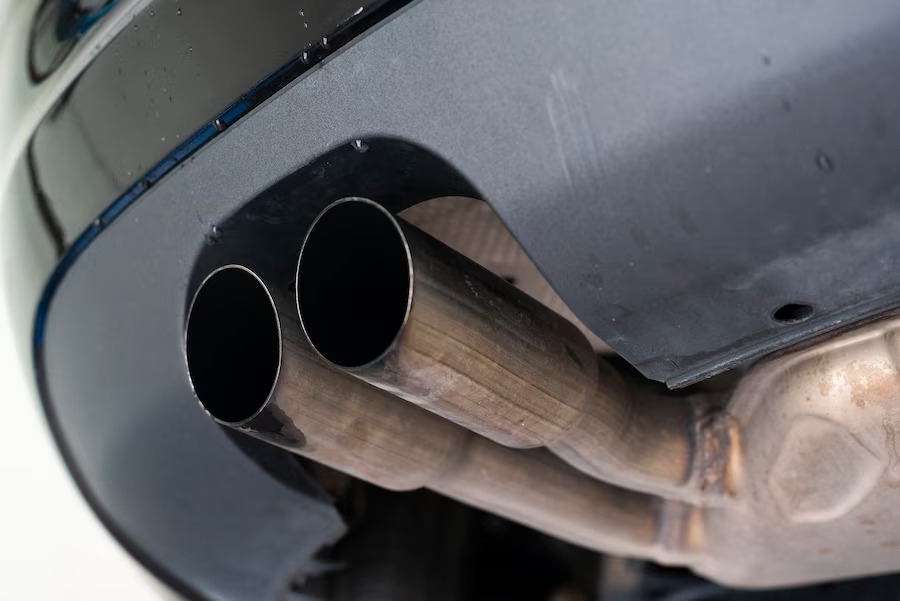
What is engine carbon deposits?
Charcoal is the solid residue generated during the incomplete combustion of fuel. It consists of soot particles, unburned hydrocarbons and oil residues.It accumulates especially in:- EGR valve.
- Intake manifolds.
- Injectors.
- Turbocharger.
- Particulate filter (DPF or FAP).
- Exhaust pipe.
Symptoms of carbon build-up
Recognizing the symptoms early is key to avoiding major damage. The most common symptoms are:Loss of engine power.
The engine responds sluggishly, it is difficult to rev up and the car seems “heavy”. This occurs because the intake and exhaust ducts are narrowed by deposits.Increased fuel consumption
The ECU (ECU) injects more fuel to compensate for poor combustion, resulting in an increase of up to 15%.Black smoke in the exhaust
Clear sign of incomplete combustion and excessive soot. Appears especially under hard acceleration.Problems when starting
Carbon deposits in valves or EGR can affect the air-fuel mixture at start-up, making ignition difficult.Engine carbon build-up can cause engine problems.
Excessive carbon build-up can cause:- EGR valve clogging: causes combustion failure and loss of power.
- DPF/FAP clogging: prevents filter regeneration, with risk of costly breakdown.
- Damage to the turbo: due to excess back pressure or dirt in the variable geometry.
- Dirty injectors: irregular fuel spraying.
- Overheating: poor gas dissipation and risk of failure of gaskets and seals.
How to remove carbon deposits from the engine
There are different methods to deal with this problem, from home solutions to professional cleaning with disassembly.Diesel exhaust pipe cleaning
The exhaust usually accumulates visible soot. A superficial cleaning with a wire brush, degreasing products and pressurized water helps to keep it clean, although it does not solve the internal problem.Home remedies to remove carbon deposits
Some drivers opt for:- Driving on the highway at medium/high revs (“giving the engine a joy”).
- Using fuel additives that help clean injectors and combustion chambers.
Professional decarbonization
The most effective and long-lasting solution. It consists of disassembling the affected components and cleaning them using different techniques:- Chemical: application of descaling liquids on EGR, manifolds and injectors.
- Ultrasonic: very effective on injectors and metal parts.
- HHO (oxyhydrogen) decarbonizers: which help to clean deposits by introducing HHO gas into the intake.
Discover Oxyhtech decarbonators
When to decarbonate
The frequency depends on the use of the vehicle:- Frequent urban driving: every 20,000-30,000 km.
- Mixed road-city driving: every 40,000-50,000 km.
- Commercial vehicles or vehicles with short journeys: shorter intervals.
Tips to avoid carbon build-up
The best strategy is prevention. Here are some recommendations:- Make long journeys on the road to allow burning of residues.
- Avoid driving exclusively in urban areas.
- Keep injectors in good condition.
- Use quality fuel and approved oil.
- Schedule preventive cleaning in the workshop with professional equipment.
Preventive maintenance
Regular maintenance reduces the likelihood of carbon build-up to critical levels. This includes:- Periodic EGR, DPF and turbo checks.
- Oil and filter changes at recommended intervals.
- Replacement of fuel filters to protect injectors.
Importance of periodic servicing
Many carbon-related faults are detected in routine checks before they lead to serious breakdowns. A gas check, intake inspection and OBD diagnostic test are essential in every maintenance.Professional carbon cleaning services
Specialized workshops such as those working with Oxyhtech technology offer:- HHO decarbonization equipment for internal cleaning.
- NOVA and ULTRA machines, adapted to different types of engines.
- Fast and efficient processes that build customer loyalty.