
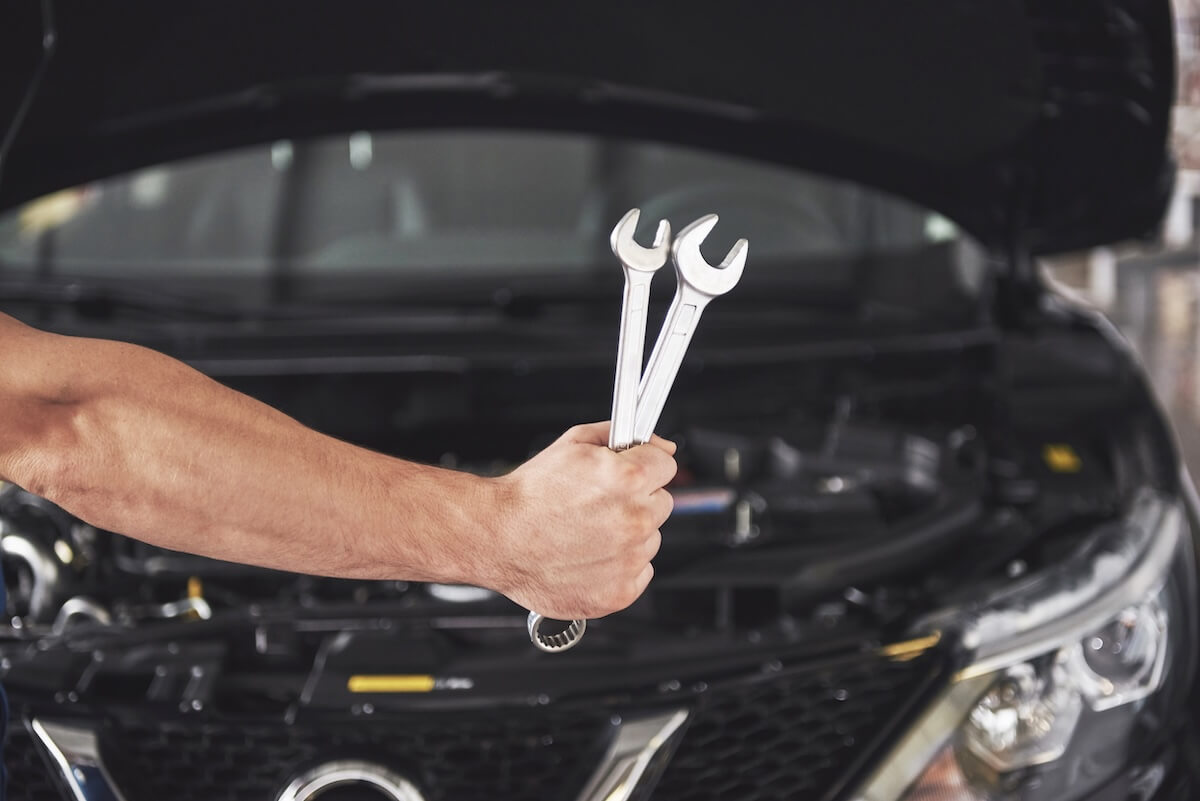
What maintenance does a car need?
A vehicle is made up of hundreds of parts and systems that work in a coordinated manner. To ensure its proper functioning, maintenance focuses on four main pillars:- Essential fluids: engine oil, coolant, brake fluid, steering and transmission.
- Filters: air, fuel, oil and cabin.
- Safety components: brakes, tires, steering and lights.
- Wear components: timing belt, battery, spark plugs (in gasoline) or glow plugs (in diesel).
Car fluid maintenance
How to check the engine oil
Oil is responsible for lubricating the engine’s moving parts, preventing wear and tear and dissipating heat.- Check the level at least once a month with the dipstick.
- Change it together with the filter every 10,000-20,000 km (depending on the type of oil and engine).
- Always use the lubricant approved by the manufacturer.
Checking the transmission oil
- In manual gearboxes it usually lasts longer, but it is advisable to check the level and possible leaks.
- In automatic gearboxes, replace every 60,000-80,000 km to avoid jerks or serious breakdowns.
Brake fluid
- It is hygroscopic (absorbs humidity).
- Replace every 2 years to avoid loss of efficiency and failures in emergency braking.
Steering fluid
- Allows smooth and precise steering.
- Check level and change every 80,000-100,000 km.
Antifreeze or coolant
- Controls engine temperature and prevents corrosion.
- Check level when engine is cold.
- Replace every 2-4 years according to manufacturer.
Filter revision
Filters are the “breathing system” of the car. Keeping them clean avoids overexertion and protects the internal systems.- Oil filter: change with every oil change.
- Air filter: every 15,000-20,000 km; sooner if you drive in dusty areas.
- Fuel filter: between 30,000-60,000 km (critical in diesel engines).
- Cabin/pollen filter: every 15,000 km or once a year, improves interior air quality.
Brake and tire maintenance
Brakes
- Check brake pads every 20,000 km.
- Replace discs when worn or scratched.
- Keep the fluid in good condition (every 2 years).
Tires
- Correct pressure according to manufacturer.
- Minimum tread depth: 1.6 mm (it is recommended to change with 3 mm).
- Rotate every 10,000-15,000 km for uniform wear.
- Check alignment and balancing to avoid vibrations and irregular wear.
Other elements for car maintenance
Timing belt
- Coordinates engine movement.
- Replace between 60,000 and 120,000 km depending on model.
- A breakage can cause catastrophic breakdowns.
Battery
- Average useful life: 3-5 years.
- Check voltage and condition of terminals periodically.
Lights
- Check operation of all bulbs.
- Replace in pairs to maintain uniform intensity.
Tips for car maintenance
- Follow the manufacturer’s maintenance booklet.
- Listen for strange sounds in the engine or transmission.
- Check levels and tires before long trips.
- Keep the exterior and interior of the engine clean.
- Go to preventive revisions, not only when a breakdown appears.
How often should we carry out maintenance?
There is no single answer: it depends on the type of car, use and conditions. As a reference:- Basic overhaul: every 10,000-15,000 km or once a year.
- Complete overhaul: every 30,000 km or every 2 years.
- Specific components: according to manufacturer’s intervals.
Replacement intervals for the car’s consumable parts
- Oil and filter: 10,000-20,000 km.
- Air filter: 15,000-20,000 km.
- Fuel filter: 30,000-60,000 km.
- Brake fluid: every 2 years.
- Timing belt: 60,000-120,000 km.
- Tires: 40,000-50,000 km (depending on use).
How to prepare my car for winter?
- Check tire condition (depth and pressure).
- Use adequate antifreeze.
- Check battery and starting system.
- Replace wiper blades if they are worn.
- Check heating and defrosting system.
Major car breakdowns
When maintenance is neglected, these are the most frequent breakdowns:- Engine seizure due to lack of oil.
- Breakage of the timing belt.
- EGR and DPF failures due to excess of carbon.
- Overheating problems due to bad coolant.
- Electrical breakdowns due to defective battery.