
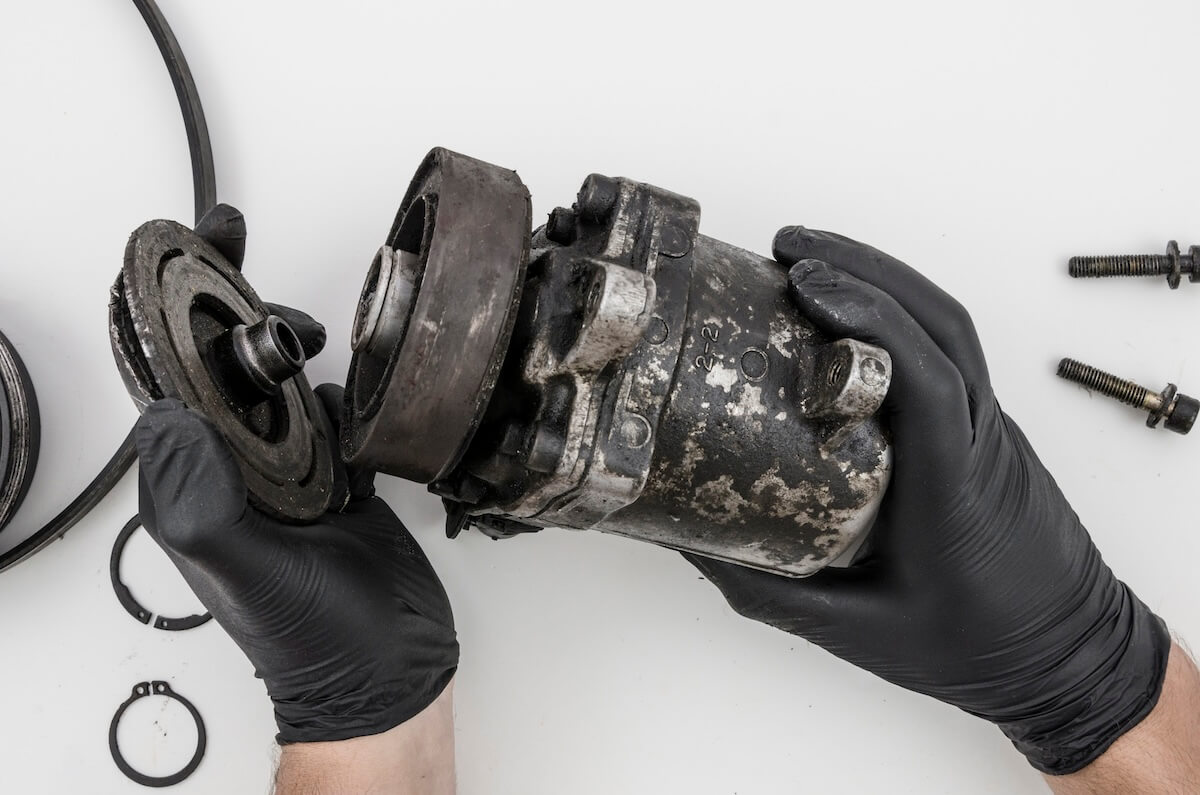
The EGR valve: what is it and what is it for?
EGR (Exhaust Gas Recirculation) is a system designed to recirculate part of the exhaust gases to the engine intake. Its purpose is to reduce the formation of nitrogen oxides (NOx), pollutants that are very harmful to health and the environment.In short: EGR returns part of the burned gases to the engine, reducing the combustion temperature and thus emissions.Objective: to reduce emissions
The use of EGR is not optional:- It was introduced to comply with Euro 3, Euro 4 and later regulations.
- It enables diesel and gasoline vehicles to pass emissions tests.
- Its correct operation is key to avoid failing the MOT.
How does the EGR valve work?
- The valve opens under certain engine load and temperature conditions.
- It allows part of the exhaust gases to pass into the intake.
- These gases mix with the fresh intake air, reducing the combustion temperature.
- When it is not needed, the valve remains closed (e.g. during cold starts or hard acceleration).
EGR valve types
There are different designs, depending on the engine and regulations:- Pneumatic EGR: early versions, vacuum-operated.
- Electric EGR: more precise, with electronic control.
- Cooled EGR: includes an exchanger to cool the gases before reintroducing them.
Tips to avoid carbon build-up in the EGR
EGR carbon buildup is unavoidable in modern diesel and gasoline engines, but you can delay its occurrence and reduce its impact. Here are the best practices:- Driving on the road at medium/high revs: when driving only in town and short distances, the EGR works harder and accumulates dirt. Road driving helps to raise the combustion temperature and burn deposits.
- Avoid prolonged idling: leaving the car idling for a long time favors the accumulation of soot.
- Quality fuel: diesel or gasoline with detergent additives keep the intake system and EGR cleaner.
- Low ash oil (low SAPS): recommended in engines with FAP/DPF, as it generates less residues that end up deposited in the EGR.
- Periodic checks of the intake and exhaust system: early detection of oil leaks in manifolds or intercoolers prevents these residues from worsening EGR fouling.
- Scheduled decarbonizations in the workshop: a professional cleaning process with disassembly every 40,000-60,000 km prevents the EGR from becoming completely clogged.
Symptoms of a bad EGR valve
When EGR starts to fail, symptoms usually appear progressively. Here are the most common ones and how to recognize them:Loss of power and jerking.
The engine responds sluggishly, especially on acceleration. It may feel like the turbo is not kicking in or like a “wall” when trying to gain speed.Increased fuel consumption
The ECU compensates for poor combustion by injecting more fuel, which results in significant additional expense, especially in city driving.Increased pollutant emissions
Excessive black or gray exhaust smoke, especially during acceleration.- Black smoke when accelerating hard.
- Bluish smoke during prolonged idling.
- Strong smell of badly burned diesel fuel.
Difficult starting
If the EGR is stuck open, too much exhaust gas enters the intake at startup, causing misfiring or hard starting.Unstable idling and vibrations
The engine “pitches” when stationary and unusual vibrations may be felt in the passenger compartment.Engine malfunction indicator
Normally the “Check Engine” light comes on, but specific warnings related to EGR, air-fuel mixture or even DPF may also be activated.Other side effects
- Failed particulate filter regenerations.
- Possible entry into emergency mode, limiting power to protect the engine.
- Indirect turbo damage due to excessive back pressure.
What light comes on when the EGR valve fails?
EGR failure is usually indicated by the engine malfunction indicator (MIL) on the instrument panel. It may be accompanied by other fault codes on the control unit related to lean mixture, gas flow failure or DPF saturation.Diagnosis of a faulty EGR valve
In the workshop, diagnosis is performed by:- OBD reading to check specific error codes.
- Measurement of gas pressures and flow rates.
- Visual inspection of the valve condition after disassembly.
How to keep the EGR valve in good condition?
Some recommendations to avoid excessive carbon build-up:- Regular driving on the road at medium/high revolutions.
- Avoid short and frequent cold journeys.
- Use quality diesel fuel and approved low ash oil.
- Perform periodic decarbonizations with professional equipment, which also cleans the EGR.
What can you do if the EGR fails?
When the valve shows serious symptoms, there are several alternatives:- Professional cleaning: disassemble the valve and manually remove the carbon deposits with specific products.
- Chemical regeneration: applying cleaners that dissolve deposits (effective in moderate dirt).
- Electronic repair: in the case of electric EGR, motors or sensors can be replaced.
How to clean or repair an EGR valve?
The process may vary depending on the type of engine, but generally includes:- Removing the valve from the intake system.
- Applying specific cleaners to dissolve soot and oil.
- In extreme cases, using ultrasound or replacement of parts.
- Verify correct operation with diagnosis after cleaning.
Replacement vs. regeneration of the EGR valve
- Regeneration or cleaning: recommended if the valve is not mechanically damaged. Prolongs its useful life and is more economical.
- Replacement: necessary if the EGR has damage to the butterfly, electric motor, sensors or internal structure.