
Yes. Cleaning a clogged particulate filter can reduce fuel consumption by eliminating back pressure in the exhaust system and allowing the engine to run more efficiently.
When the DPF is saturated, the engine needs more fuel to compensate for the restriction of gases. After professional cleaning, the flow returns to normal and consumption can stabilize.
What is a particulate filter and how does it affect consumption?
The particulate filter (DPF or FAP) traps the soot generated by diesel combustion. When it becomes clogged, back pressure increases and the engine consumes more fuel.
How it affects consumption
- Greater turbo effort.
- More frequent regenerations.
- Additional fuel injection.
- Less efficient combustion.
Technical detail for workshops
Many customers notice increased fuel consumption without realizing that the DPF is the cause.
Causes of particle filter saturation
The causes of saturation or failed regeneration directly increase fuel consumption.
- Partially clogged DPF.
- Interrupted regeneration.
- Emergency mode.
- Associated dirty EGR.
- Injectors with poor atomization.
A dirty DPF not only pollutes more, it also increases fuel consumption.
Pay attention to your car’s warnings
Warnings on the dashboard are an early sign that fuel consumption may start to increase.
- DPF warning light on.
- Very frequent regenerations.
- Fan running after turning off the engine.
- Strong smell from the exhaust.
Ignoring these warnings usually leads to higher fuel consumption and additional breakdowns.
Step 1: Identify the signs of a clogged particulate filter
Before cleaning, it is essential to confirm that the DPF is affecting performance.
- Loss of power.
- High fuel consumption.
- Protection mode.
- High differential pressure reading.
Professional diagnosis prevents unnecessary interventions.
How to clean the particulate filter?
DPF filter cleaning must be adapted to the level of saturation and the type of vehicle.
Filter regeneration: how does it work?
Regeneration is the process by which the system burns off accumulated soot.
- Passive → sustained driving.
- Active → ECU intervention.
- Forced → carried out in a workshop.
When regeneration is no longer sufficient, professional cleaning is necessary.
The 5 ways to clean a particulate filter
There are different methods, but not all are equally effective.
- Forced regeneration.
- Preventive additives.
- Basic chemical cleaning.
- Corrective deep cleaning.
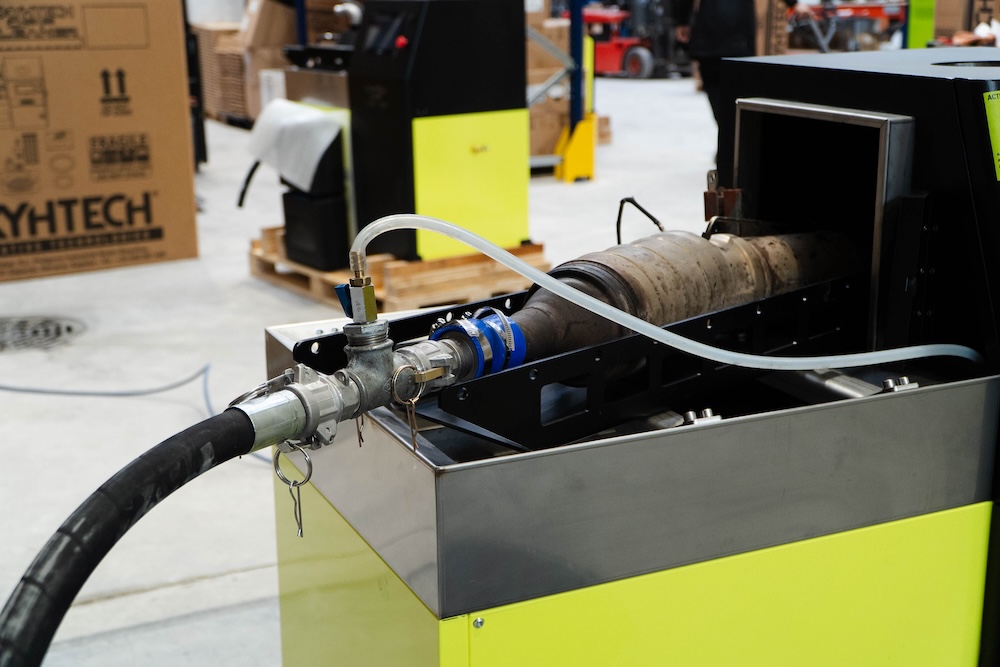
- Cleaning with specific machines (most effective in advanced cases).
DPF filter cleaning with specific machines
This method allows:
- Remove soot and ash.
- Restore internal flow.
- Reduce back pressure.
- Restore consumption and performance.
It is especially recommended for:
- Fleets.
- Delivery vans.
- Industrial vehicles.
- Trucks.
Step 1: Choose DPF Cleaner or DPF Cleaner Plus
The choice depends on the level of clogging.
- DPF Cleaner → preventive maintenance.
- DPF Cleaner Plus → high saturation or failed regenerations.
A prior diagnosis ensures the correct choice.
Step 2: Refuel
After applying the product, it is recommended to refuel according to technical instructions to facilitate combustion of the treatment.
Step 3: Drive the car
It is necessary to drive the vehicle to allow the system to reach temperature and complete the cleaning process.
- Maintain a steady speed.
- Avoid short trips during treatment.
Step 4: Repeat if necessary
For filters with advanced accumulation, it may be necessary to repeat the process, always under technical supervision.
Tips for improving the health of my particulate filter
Prevention is more effective than intervention when consumption has already skyrocketed.
- Avoid exclusively urban use.
- Do not interrupt regenerations.
- Check EGR and injectors.
- Perform periodic decarbonization.
- Schedule preventive maintenance.
Relationship between filter cleanliness and fuel consumption
A clean DPF allows the engine to breathe properly, reducing mechanical stress and optimizing combustion.
- Lower back pressure.
- Less frequent regenerations.
- More stable combustion.
- Normalized fuel consumption.
In many cases, the customer notices an immediate improvement in smoothness and response.
Conclusion: Is it worth DPF filter cleaning?
Yes, provided the filter is recoverable. Cleaning the DPF can reduce fuel consumption, prevent breakdowns, and extend the life of the system.
For workshops, offering a structured particulate filter cleaning service not only improves customer satisfaction, but also becomes a technical and profitable line of business, especially for modern diesel vehicles and urban fleets.
At Oxyhtech, we help workshops implement professional DPF cleaning solutions, advising on when to use DPF Cleaner and when to apply DPF Cleaner Plus, depending on the level of saturation and the type of vehicle.
Do you want to reduce DPF-related breakdowns and offer a specialized service in your workshop? Contact us and we will help you integrate an effective solution tailored to your workload.
Frequently asked questions
The particulate filter can be cleaned several times, but the frequency depends on the condition of the filter and the use of the car. Generally, it is recommended to clean it every 20,000 to 30,000 kilometers to ensure effective regeneration and prevent diesel particles from clogging the system.
Driving with a full exhaust filter is not recommended as it can cause engine damage and increase harmful particle emissions. It is crucial to clean the particulate filter regularly to prevent clogging and ensure the efficiency of the car.
To know if the particulate filter is dirty, look for symptoms such as loss of engine power, increased fuel consumption, black smoke from the exhaust, or the engine warning light coming on. These signs indicate that the diesel particulate filter may be clogged and require cleaning or regeneration.