Cleaning a diesel engine’s particulate filter properly helps restore exhaust gas flow, improve engine performance, and prevent costly breakdowns in components such as the turbo or the EGR. Depending on the level of saturation, the DPF can be regenerated through decarbonization, treated with additives, or may require professional cleaning with a dedicated machine.
For workshops, choosing the right method based on the filter’s condition is key to delivering a long-lasting, profitable solution. In this Oxyhtech guide, we’ll tell you everything you need to know.
What is the particulate filter and why does it get dirty?
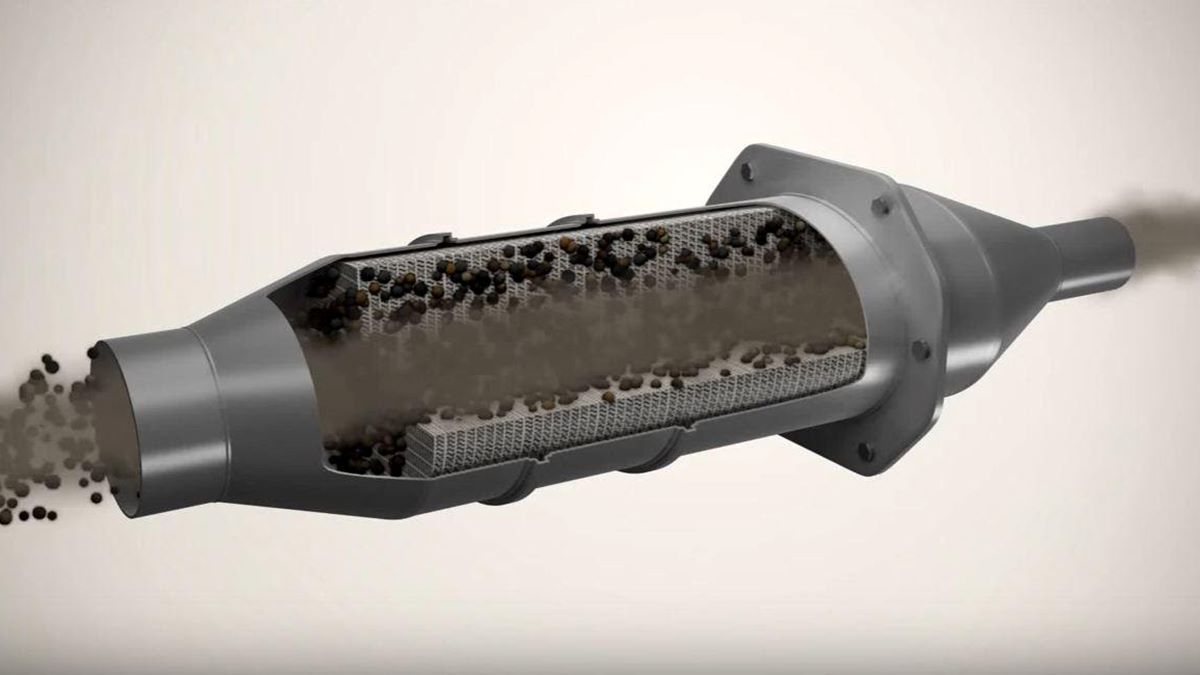
The diesel particulate filter (DPF or FAP) is an exhaust system component responsible for trapping the solid particles generated during combustion.
Why does it get dirty?
The filter accumulates:
- soot from combustion
- ash derived from engine oil
- residue from incomplete combustion
Soot can be removed through regeneration, but ash builds up progressively and requires professional cleaning.
Here you’ll find a complete guide on what the particulate filter is and why it gets clogged.
Why does the FAP become saturated and how can you prevent it?
Saturation occurs when the system can no longer properly eliminate the accumulated residue.
Most common causes
- continuous urban driving
- short trips
- interrupted regenerations
- EGR or injector failure
- incorrect oil
- combustion problems
In many cases, the problem doesn’t start in the DPF, but in other engine components.
Pay attention to your car’s warnings
The vehicle usually gives warnings before the filter becomes completely clogged.
Most common signs
- DPF warning light on
- loss of power
- increased fuel consumption
- frequent regenerations
- excessive smoke
Spotting these symptoms in time allows you to act before the filter becomes fully blocked.
How often should the particulate filter be cleaned?
There is no universal interval, as it depends on how the vehicle is used.
Reference values
| Type of use | Recommended inspection / cleaning |
|---|---|
| Highway | 150,000 – 200,000 km |
| Mixed use | 100,000 – 150,000 km |
| Intensive urban use | 60,000 – 100,000 km |
For urban-use vehicles, preventive cleaning is especially important.
Ways to clean a particulate filter in your workshop
There are different solutions depending on the filter’s level of saturation.
How does natural regeneration work?
It takes place during driving when the exhaust reaches a sufficient temperature. It is only effective at low saturation levels.
How does decarbonization help the DPF?
Decarbonization improves the engine’s combustion and reduces soot generation.
In mild and moderate conditions, Oxyhtech’s decarbonization machines help the system regenerate correctly and delay filter saturation.
In addition, this process also benefits:
- the EGR valve
- the turbo
- the intake system
See decarbonization machines
When should you use FAP additives?
Additives are useful as preventive maintenance.
Oxyhtech’s FAP additives:
- make soot combustion easier
- assist with regenerations
- improve preventive cleaning
However, they do not remove accumulated ash.
See additives
Which method do we recommend for cleaning the particulate filter?
When the filter shows moderate or high saturation, professional cleaning is the most effective solution.
Oxyhtech’s DPF cleaning machines allow you to:
- remove soot and ash
- restore internal flow
- recover differential pressure
- work on both passenger cars and heavy-duty vehicles
In addition, these machines can also clean:
- EGR coolers (Euro 5 and Euro 6)
- catalytic converters
- intercooler radiators
- intake system components
This expands the workshop’s range of services and increases the equipment’s profitability.
See DPF machines
Even so, everything depends on the level of saturation.
- Mild scenario: Decarbonization + FAP additive
- Moderate scenario: Cleaning with a professional DPF machine
- High scenario: Deep corrective cleaning
Regeneration on its own is usually only a temporary solution, since it removes only surface soot and not accumulated ash.
Comparison table: regeneration vs professional cleaning
| Function | Regeneration | Oxyhtech DPF Machine |
|---|---|---|
| Removes soot | YES | YES |
| Removes ash | NO | YES |
| Removes oil / ceria residue | NO | YES |
| Lasting result | Temporary | Complete |
| Restores internal flow | Partial | Total |
This is the main difference between “maintaining” the filter and truly restoring it.
Consequences of not cleaning the filter in time
Ignoring the problem can lead to serious breakdowns.
Most common problems
- damaged turbo
- clogged EGR
- overheating
- high fuel consumption
- limp mode
In advanced stages, it may even be necessary to replace the filter.
Tips to extend the life of the particulate filter
Prevention remains the best strategy.
Key recommendations
- take long trips periodically
- don’t interrupt regenerations
- use approved engine oil
- check the EGR and injectors
- carry out preventive maintenance
In workshops, offering preventive cleaning builds customer loyalty and reduces future breakdowns.
Cleaning the particulate filter is no longer a one-off service
Cleaning the particulate filter is no longer a one-off service: it’s a growing necessity in modern diesel vehicles. Knowing how to tell when to apply decarbonization, additives, or professional cleaning makes it possible to deliver effective solutions and avoid unnecessary replacements.
With Oxyhtech’s solutions, workshops can work not only on DPFs, but also on EGRs, catalytic converters, intercoolers, and intake systems — expanding their services and increasing profitability.
Do you want to add a professional DPF cleaning service to your workshop? Get in touch with us and discover which solution best suits your business.
Contact
Frequently Asked Questions
How much should a diesel particulate filter (DPF) cleaning cost?
The cost depends on the level of saturation, the type of vehicle, and the method used. Professional cleaning is usually much cheaper than replacing the entire filter, especially in heavy-duty vehicles.
Is it good to clean the DPF?
Yes, as long as the right method is used. A professional cleaning removes soot and ash, restores the system’s performance, and prevents major breakdowns in the engine and exhaust.
How many kilometres do you need to drive to clean the particulate filter?
During a regeneration, you normally need to drive between 15 and 30 minutes at a constant speed. However, this only works when the saturation level is low.