
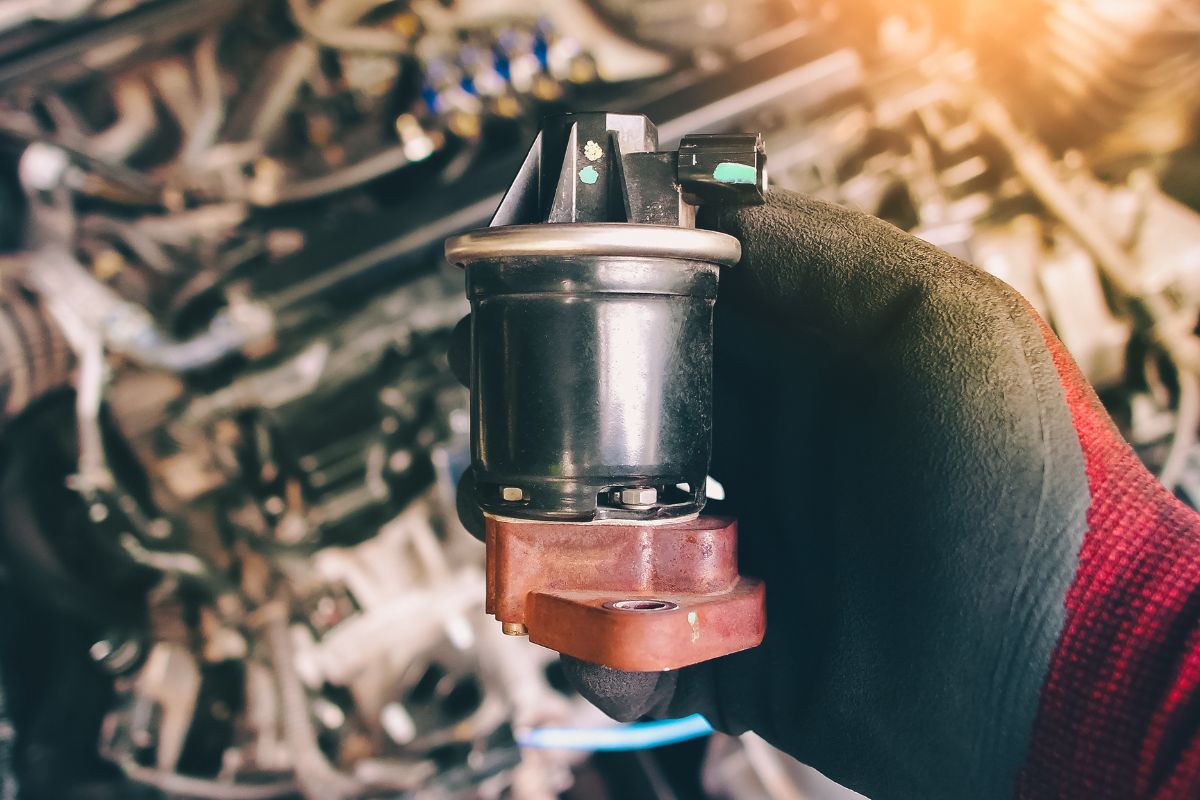
The EGR valve is one of the components that causes the most failures in diesel and gasoline engines due to carbon buildup. Cleaning it properly is essential to restore performance, reduce emissions, and avoid costly breakdowns. At Oxyhtech, we explain how to clean the EGR valve depending on its location, what methods are available, when it needs to be removed, and how to optimize the processes in a professional workshop.
What is the EGR valve and why should it be cleaned?
The EGR (Exhaust Gas Recirculation) is a system designed to reintroduce part of the exhaust gases into the intake, with the aim of reducing the combustion temperature and decreasing nitrogen oxides (NOx).
However, these gases carry:
- Soot.
- Oil residues.
- Particles from incomplete combustion.
- Unburned hydrocarbons.
All of this generates sticky carbon deposits that adhere to:
- The valve.
- The intake manifold.
- The EGR ducts.
- The throttle valve.
When carbon deposits build up, the valve can become stuck in the open or closed position.
Consequences:
- Loss of power.
- Increased fuel consumption.
- Black smoke.
- Combustion failures.
- Jerking.
- Entry into emergency mode.
- Engine warning light comes on.
Cleaning is necessary to restore the system to its normal operation.
How to clean the EGR valve in your workshop, step by step
Cleaning depends on the level of dirt and the type of valve, but the general procedure is similar.
1. Preliminary diagnosis
Before cleaning, it is essential to:
- Read OBD codes.
- Check the actuators.
- Check the manifold and ducts.
- Verify turbo and injection pressure.
- Perform a visual inspection if accessible.
If codes P0400-P0404 appear, the problem is usually EGR.
2. Professional cleaning by decarbonization
Oxyhtech NOVA, ULTRA, or DPF Cleaner equipment allows for deep cleaning of:
- EGR.
- Turbocharger.
- Manifold.
- Combustion chamber.
- Injectors.
Advantages:
- Reduces workshop labor time.
- Ensures uniform internal cleaning.
- Avoids dismantling complex areas.
- Reduces the risk of EGR failure.
- Restores overall engine performance.
Decarbonization is especially useful when the EGR is not completely blocked but shows recurring symptoms.
At Oxyhtech, we provide you with the technology, products, and support to do so with confidence. Contact us for more information for your workshop!
How to clean the EGR valve according to its location
The location of the EGR is key to choosing the right method. There are three main groups:
Valve near the exhaust
This type is located very close to the exhaust manifold.
Characteristics:
- It operates at very high temperatures.
- Accumulates a lot of hard carbon deposits.
- May present a risk of seizure.
Ideal cleaning method:
- Disassembly and manual cleaning.
- Check the EGR cooler.
- Additional decarbonization to prevent re-clogging.
Valve in the intake system
These EGRs are usually more accessible, located at the top of the engine.
Features:
- They receive less heat.
- The carbon deposits are lighter and oilier.
- They are better suited to chemical cleaning.
Ideal method:
- If there is little obstruction: Chemical cleaning + Oxyhtech decarbonization
- If the dirt is severe: Complete disassembly + Deep cleaning + Manifold inspection (usually very clogged in diesel engines).
Valve between exhaust and intake
This is the most modern and complex system.
Features:
- Includes a heat exchanger.
- Soot mixes with condensation.
- Cleaning takes longer.
Ideal method:
- Complete disassembly.
- Cleaning of the valve + cooler.
- Leak check.
- Decarbonization with hydrogen to clean internal ducts.
Cooled EGRs are the most prone to failure and are often expensive to replace.
Conclusion: the correct method depends on the location and condition of the EGR
A professional workshop should be able to choose the appropriate method based on:
- Level of dirt.
- Engine type.
- Location of the EGR.
- Vehicle symptoms.
- Customer budget.
But if you want to offer a comprehensive, efficient, and cost-effective service, the ideal combination is:
Disassembly + cleaning + professional decarbonization with Oxyhtech equipment.
This is the safest way to prevent the problem from returning.
At Oxyhtech, we provide you with the technology, products, and support to do so with confidence. Contact us for more information for your workshop!
Frequently asked questions about EGR valve cleaning
When the EGR valve fails, the “Check Engine” light on the vehicle’s dashboard usually comes on. This indicator alerts the driver to problems in the exhaust gas recirculation (EGR) system, in both mechanical and electronic valves.
When the EGR system malfunctions, the diesel engine may experience problems such as loss of power, increased pollutant emissions, excessive fuel consumption, and warning lights coming on in the dashboard. These problems can be caused by obstructions in the EGR valve or faults in its electronic components.
If the EGR valve is clogged, it can cause a number of engine problems, such as decreased performance, increased pollutant emissions, and possible damage to other components. It is crucial to clean the EGR valve, whether mechanical or electronic, to avoid these problems.