
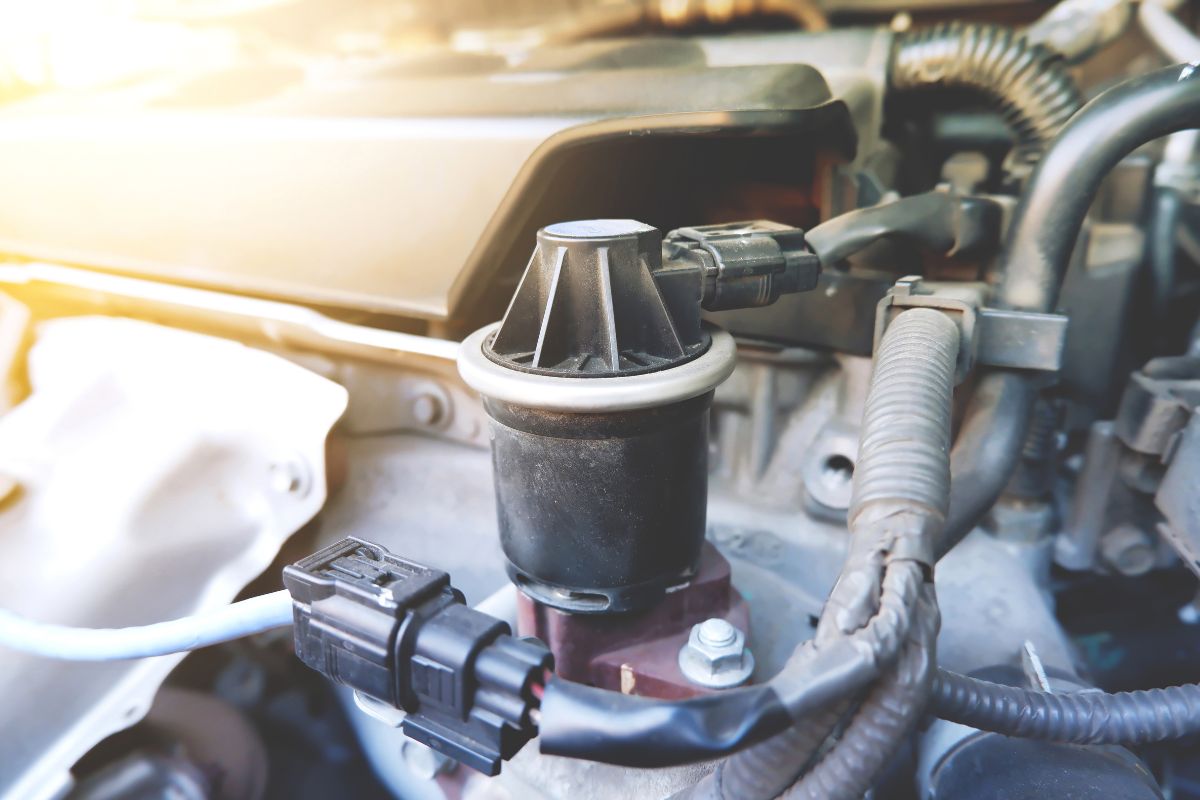
The EGR valve is one of the most important components in modern engines—both diesel and gasoline—but also one of the most prone to breakdowns due to carbon buildup. When the EGR fails, the engine loses power, fuel consumption increases, emissions skyrocket, and warning lights appear on the instrument panel.
In a mechanic’s workshop, understanding how it works, why it gets dirty, how to diagnose it, and what cleaning or repair methods to apply is essential to providing a professional, cost-effective, and quality service.
At Oxyhtech, we cover everything you need to know about the EGR valve: how it works, types, symptoms, cleaning methods, the difference between replacement and regeneration, prices, and preventive maintenance.
What is the EGR valve and what is it for?
The EGR (Exhaust Gas Recirculation) valve is a system designed to recirculate a portion of the exhaust gases back into the engine intake.
Its main purpose is to:
- Reduce combustion temperatures.
- Decrease nitrogen oxides (NOx).
- Comply with anti-pollution regulations.
By reintroducing part of the burned gases into the combustion chamber, the air-fuel mixture is cooled and pollutant emissions are reduced.
How does the EGR valve work?
The valve opens and closes according to the engine’s needs:
- At low revs, it opens partially to recirculate gases.
- At high loads, it remains closed so as not to affect performance.
- At idle, it operates in a controlled manner to balance temperature and emissions.
It is controlled by the ECU, which calculates in real time how much exhaust gas should be recirculated.
Gasoline EGR valve
In gasoline engines, EGR is used to a lesser extent, as these engines generate less NOx. Even so, its function is the same: to reduce emissions and stabilize combustion.
They tend to get less dirty than diesel engines, but when they fail they cause:
- Unstable idling.
- Jerking.
- Loss of acceleration.
Diesel EGR valve
In diesel engines, the EGR works much harder, so it gets dirty more easily.
This occurs because:
- Diesel combustion produces more soot.
- The engine operates at lower temperatures.
- Urban driving increases dirt.
- The mixture of gases returns with particles that adhere to the EGR.
This is why most EGR failures occur in diesel cars.
Types of EGR valves
There are several types depending on how they work:
1. Pneumatic EGR: Vacuum-controlled. Common in older engines.
2. Electric EGR: Controlled by the ECU via an electric motor. More precise, more efficient, more prone to carbon deposits.
3. Cooled EGR: Includes an exchanger to cool the recirculating gases. Used in modern engines to further reduce NOx.
4. Digital EGR or EVR: These incorporate position and opening sensors. They are the most advanced.
Most common problems with the EGR valve
The EGR becomes dirty mainly due to:
- Urban driving.
- Short journeys.
- Low operating temperature.
- Poor fuel quality.
- Combustion faults.
- Carbon buildup in the intake.
Among the most frequent faults are:
- Carbon blockage.
- Incorrect opening.
- Electric motor faults.
- Jams in the EGR butterfly valve.
- Loss of tightness.
Symptoms of a faulty EGR valve
When the EGR fails, the engine notices it immediately. The most common symptoms are:
- Loss of power: The engine becomes sluggish and responds slowly.
- Increased fuel consumption: Combustion becomes less efficient.
- Black or blue smoke from the exhaust: Especially in diesel engines, due to excess unburned fuel.
- Jerking when accelerating: Air/fuel mixture faults.
- Unstable idling: Vibrations or fluctuating RPM.
- Internally dirty engine: The intake manifold becomes clogged with soot.
How to remove carbon deposits from the engine?
Which warning light comes on when the EGR valve fails?
Normally, the following light comes on:
- Malfunction indicator lamp (MIL).
- The message “Engine malfunction” or “Check emission system.”
- In some cases, limp mode.
An OBD diagnosis will show common codes such as:
- P0400.
- P0401.
- P0402.
- P0403.
- P0404.
These codes indicate problems with EGR flow or malfunction.

How to clean the EGR valve
EGR cleaning can be done in three ways, depending on the level of dirt:
1. Chemical cleaning
Useful as preventive maintenance. Includes:
- Intake cleaners.
- Diesel additives.
- Specific aerosols for EGR.
Can help improve performance, but does not fix serious malfunctions.
2. Cleaning by removing the EGR
This is the most effective method when there is severe carbon buildup. It consists of:
- Removing the valve.
- Cleaning manually.
- Using industrial degreasers.
- Checking the butterfly valve.
- Checking the electric actuators.
Many workshops combine this with professional decarbonization using HHO hydrogen with Oxyhtech NOVA or ULTRA equipment, which cleans the rest of the intake circuit.
3. Complete EGR regeneration
This consists of:
- Deep cleaning.
- Actuator check.
- Replacement of seals.
- Sensor check.
- System restoration.
It is more economical than replacing the entire part.
How to keep the EGR valve in good condition?
Here are the best tips for extending its service life:
- Avoid short trips.
- Occasionally drive at medium/high revs.
- Use high-quality diesel fuel.
- Have professional decarbonization performed every 20,000–30,000 km.
- Check the intake manifold.
- Change the air filter when necessary.
Decarbonization with Oxyhtech hydrogen is particularly effective because it cleans:
- EGR.
- Turbo.
- Injectors.
- Manifold.
- Combustion chamber.
All in the same treatment, reducing the risk of future breakdowns.
For workshops, in-depth knowledge of this system is key to providing accurate diagnostics, efficient repairs, and high value-added service.
At Oxyhtech, we provide you with the technology, products, and support to do so with confidence. Contact us for more information for your workshop!