
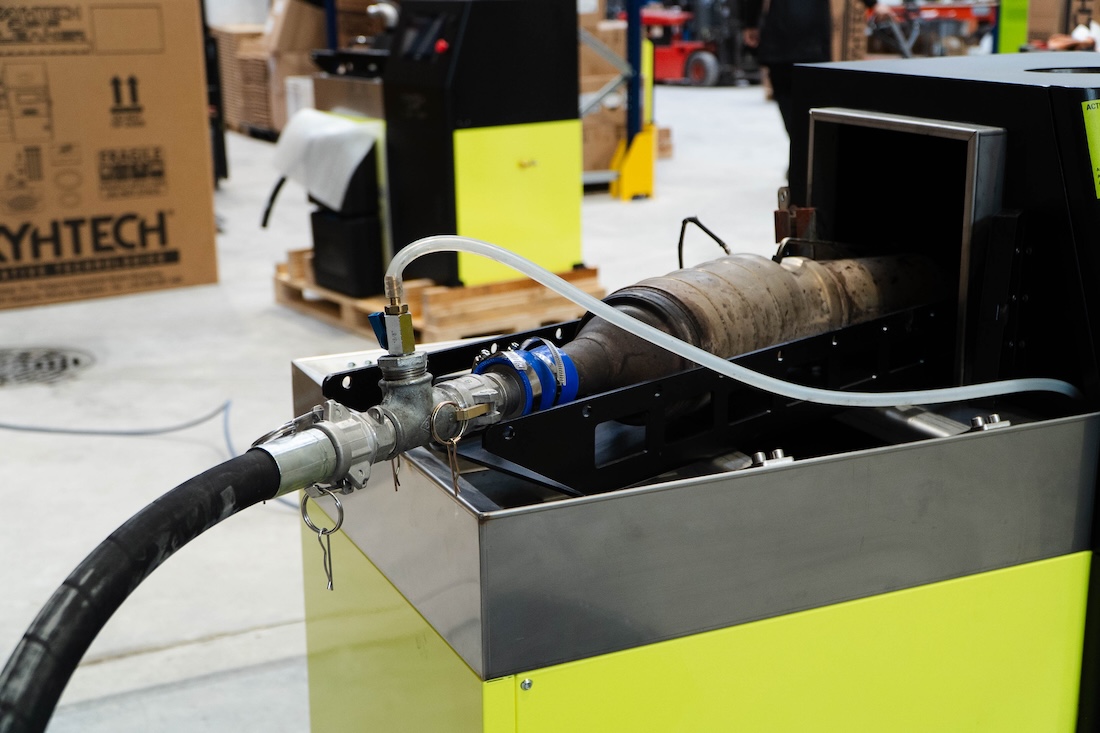
When the particulate filter fails, the vehicle may lose power, increase fuel consumption, and go into emergency mode. Ignoring the problem can cause serious damage to the turbo, EGR, and engine. The solution depends on the level of saturation and the cause of the failure.
What is a diesel particulate filter (DPF)?
The diesel particulate filter (DPF) is a component of the exhaust system that traps soot generated by combustion to reduce pollutant emissions.
How it works
- It captures solid particles.
- It removes them through regeneration.
- Complies with anti-pollution regulations.
If the system cannot regenerate properly, the fault appears.
Symptoms of a faulty particulate filter
The most common symptoms are loss of power, DPF warning light on, and frequent or failed regenerations.
Clear signs
- Emergency mode activated.
- High fuel consumption.
- Dark smoke.
- Strong smell from the exhaust.
- Fan running after engine is turned off.
For the workshop, these symptoms are a sign that the DPF needs immediate diagnosis.
DPF failure and blockages
DPF failure is usually related to excessive saturation or problems in other engine systems.
The DPF rarely fails on its own. In most cases, it is the result of another component malfunctioning.
5 main causes of malfunctioning or blocked particulate filters
1. Faulty EGR valve
A defective EGR increases soot production and accelerates DPF saturation.
When the EGR is not working properly:
- Combustion is less efficient.
- More carbon deposits are generated.
- The filter clogs sooner.
2. Use of the wrong oil
Using non-approved oil or oil with a high ash content drastically shortens the life of the DPF.
- Non-low-SAPS oils generate more waste.
- Ash is not removed during regeneration.
- It accumulates permanently in the filter.
For workshops, using the right oil is key to prevention.
3. Faulty fuel injectors
Injectors with poor atomization cause incomplete combustion and excess particles.
Direct consequence:
- More soot.
- Constant regenerations.
- Accelerated saturation.
4. Faulty turbo
A defective turbo alters air pressure and affects combustion, generating more waste that saturates the DPF.
- Clogged DPF → increased back pressure → turbo strain.
- Defective turbo → poor combustion → more soot → DPF saturation.
This is a very common two-way relationship in the workshop.
5. Short trips
Short trips prevent the DPF from reaching the temperature necessary for regeneration.
This is particularly problematic in:
- Urban vehicles.
- Delivery fleets.
- Exclusively city use.
Consequences of driving with a faulty particulate filter
Driving with a faulty DPF can cause significant mechanical damage.
- Turbo failure.
- Oil contamination.
- Engine damage.
- Failure to pass the MOT test.
- Increased fuel consumption.
The longer you wait to have it repaired, the more complex the repair will be.
How to fix a faulty particulate filter?
The solution depends on the level of saturation and the structural condition of the filter.
DPF regeneration
Recommended when:
- Saturation is moderate.
- The system still allows regeneration.
- There is no structural damage.
It can be passive, active, or forced in the workshop.
Professional cleaning of the particulate filter
When regeneration is not sufficient, professional cleaning is the most effective alternative.
It allows:
- Remove soot and ash.
- Restore gas flow.
- Avoid unnecessary replacement.
- Restore performance.
Especially recommended for:
- Urban passenger cars.
- Vans.
- Industrial vehicles.
Filter replacement
Required when:
- The filter is cracked.
- There is internal melting.
- The structure is damaged.
This should always be the last option after diagnosis.
Professional solutions for DPF cleaning
In the workshop, effective intervention requires:
- Prior diagnosis.
- Differential pressure measurement.
- Choice of the appropriate method.
- Use of professional products such as DPF Cleaner or DPF Cleaner Plus, depending on the level of clogging.
Proper cleaning can completely restore the system’s performance.
Tips for preventing particle filter failures
Prevention is more cost-effective than repair.
Key recommendations
- Use approved low-SAPS oil.
- Check EGR and injectors.
- Avoid driving exclusively in urban areas.
- Perform preventive maintenance on the DPF.
- Have the system professionally cleaned before it reaches critical saturation.
- Decarbonize the engine periodically.
Turn DPF failure into a technical opportunity for your workshop
DPF failure is one of the most common problems in modern diesel engines. Knowing how to correctly diagnose the cause and apply the appropriate solution allows you to avoid unnecessary replacements and offer high-value technical service.
At Oxyhtech, we help workshops implement professional solutions for DPF cleaning and maintenance, with specific products and technical advice based on the level of saturation and type of vehicle.
Do you want to improve DPF fault management in your workshop and reduce recurring breakdowns? Contact us and we will help you structure an effective and cost-effective solution tailored to your workload.