
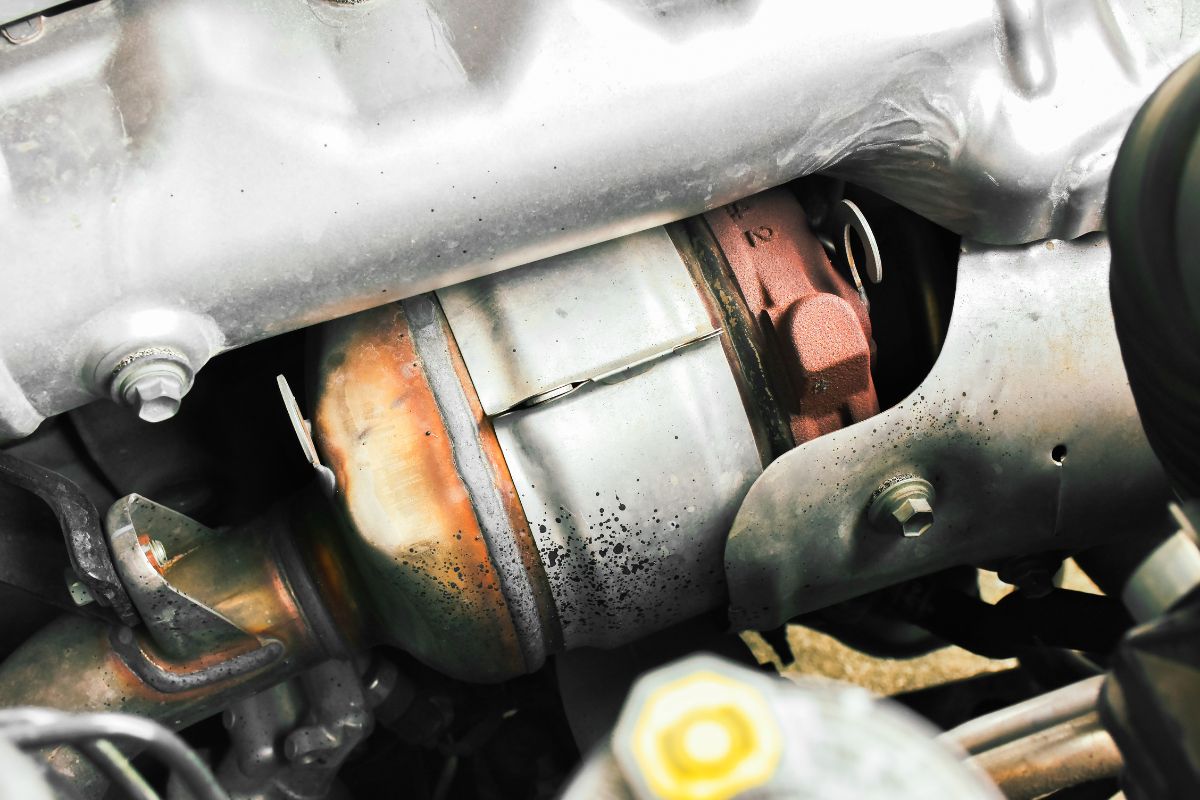
Diesel particulate filter (DPF) cleaning is a technical process designed to remove soot and ash accumulated in the filter when automatic regeneration is no longer sufficient. It is carried out using professional methods in a workshop to restore the capacity of the DPF and avoid replacement.
What exactly does diesel particulate filter cleaning involve?
It consists of removing or treating the DPF to eliminate the solid residues that block its internal structure and cause back pressure in the exhaust system.
The DPF is designed to retain particles, but not to accumulate them indefinitely. When the saturation level exceeds a critical threshold, the system can no longer self-clean through regeneration and external intervention is required.
Professional cleaning allows:
- Restore gas flow.
- Reduce back pressure.
- Restore normal engine operation.
- Prevent damage to the turbo, EGR, and injectors.
A diesel passenger car in constant urban use enters regeneration every few kilometers. After professional cleaning of the DPF, regenerations become more spaced out and the engine regains stability.
Cleaning is not the same as regeneration. Regeneration burns soot; cleaning removes soot and ash, which do not burn.
When is diesel particulate filter cleaning necessary?
When the DPF reaches a saturation level that prevents automatic regeneration or causes persistent warnings and loss of performance.
Clear indicators
- DPF warning light permanently on.
- Engine in emergency mode.
- Very frequent or failed regenerations.
- Noticeable increase in fuel consumption.
- High back pressure readings in diagnostics.
In these cases, continuing to drive will make the problem worse.
How is the diesel particulate filter cleaned in the workshop?
Cleaning is carried out using professional methods adapted to the level of saturation and the type of vehicle, always with prior technical inspection and diagnosis.
General workshop process
1. Prior diagnosis
- Reading of fault codes.
- Measurement of differential pressure.
- Assessment of the level of saturation.
Choice of appropriate method
- Preventive or corrective.
- With or without disassembly.
- Depending on the use of the vehicle (passenger car, van, industrial).
Cleaning of the DPF
- Removal of accumulated soot and ash.
- Restoration of the filter’s internal flow.
Final verification
- Checking values.
- Functionality test.
- Reset parameters if necessary.
What methods are there for cleaning a diesel particulate filter?
Assisted preventive cleaning
Used when the DPF is not yet clogged and the aim is to prevent further saturation.
Typical application:
- Vehicles with occasional warnings.
- Frequent urban use.
- Fleets requiring periodic maintenance.
Oxyhtech professional solutions:
- DPF Cleaner → facilitates soot removal and helps restore normal regeneration.
Professional corrective cleaning (saturated DPF)
Used when the filter can no longer regenerate and the level of clogging is high. What is a DPF particulate filter and why does it become clogged?
Typical application:
- Persistent warning light.
- Emergency mode.
- Failed regenerations.
Oxyhtech solutions:
- DPF Cleaner Plus → formulated to remove more persistent solid residues and restore the filter’s capacity.
This type of cleaning avoids the need to replace the DPF in most viable cases.
Comprehensive cleaning combined with engine maintenance
DPF cleaning is more effective when accompanied by a general cleaning of the combustion system.
Why it matters: If the engine generates excess soot, the DPF will quickly become saturated again.
This is where professional decarbonization with hydrogen (HHO) comes in:
- It reduces particle production.
- It improves combustion.
- Extends the life of the DPF after cleaning.
What is the difference between cleaning the DPF and replacing it?
Cleaning seeks to restore the original filter; replacement involves replacing it with a new one.
Technical comparison
| DPF cleaning | DPF replacement |
| Keeps the original filter | Complete replacement |
| Less operational impact | Longer downtime |
| Recurring technical solution | Final solution |
| Ideal as a workshop service | Last resort |
Important note
Replacement is only necessary when the filter is structurally damaged. In most cases of clogging, professional cleaning is sufficient.
Which vehicles require more diesel particulate filter cleaning?
Those used in urban areas, with variable loads, or intensive work cycles.
Most common cases
- City diesel passenger cars.
- Delivery vans.
- Construction vehicles.
- Trucks and heavy transport.
- Fleets with prolonged idling.
In industrial vehicles, poor DPF management leads to costly downtime and loss of productivity, so preventive cleaning is key.
How can you prevent the DPF from becoming clogged again after cleaning?
By correcting the cause of excess soot and performing regular maintenance.
Key recommendations for workshops
- Check EGR and injectors.
- Ensure efficient combustion.
- Recommend regular decarbonization.
- Use specific DPF maintenance products.
- Educate the customer about driving habits.
Quick technical summary
- Cleaning the diesel particulate filter removes accumulated soot and ash.
- It is necessary when regenerations no longer work.
- There are preventive and corrective methods.
- Professional cleaning avoids the need to replace the DPF.
- In commercial vehicles, it is a critical intervention.
- It must be accompanied by engine maintenance.
Turn DPF cleaning into a profitable service
The diesel particulate filter is one of the most critical points in today’s engines and one of the main causes of breakdowns and MOT failures. For workshops, mastering professional DPF cleaning allows them to offer a real technical solution, avoid unnecessary replacements, and generate a high-value recurring service.
At Oxyhtech, we help workshops incorporate specific solutions for DPF cleaning and maintenance, with products such as DPF Cleaner and DPF Cleaner Plus, as well as technical advice on how to apply each method according to the type of vehicle and level of saturation.
Would you like to implement or improve the diesel particulate filter cleaning service at your workshop? Contact us and we will help you choose the most suitable solution for your workload, type of customer, and vehicle fleet.
Frequently asked questions about diesel particulate filter cleaning
The cost of cleaning a diesel particulate filter depends on the type of vehicle, the level of saturation, and the service offered by each workshop. Preventive cleaning in a passenger car cannot be compared to corrective intervention in an industrial vehicle. The important thing is the value of the service: avoiding replacements and reducing downtime.
A dirty particulate filter causes frequent regenerations, warning lights on the dashboard, and progressive loss of performance. Confirmation is obtained through diagnosis and differential pressure readings. Not all warnings mean replacement is necessary; many filters can still be recovered.
There is no set number of miles; it depends on vehicle use and whether regenerations are completed correctly. In urban driving, the DPF can become saturated much sooner than in mixed or highway use. Preventive maintenance is more reliable than waiting for a specific mileage.
If the diesel particulate filter is not cleaned, the blockage increases and serious engine damage can occur. Back pressure damages the turbo, contaminates the oil, and causes other systems to fail. Ignoring the problem usually leads to more complex repairs.