
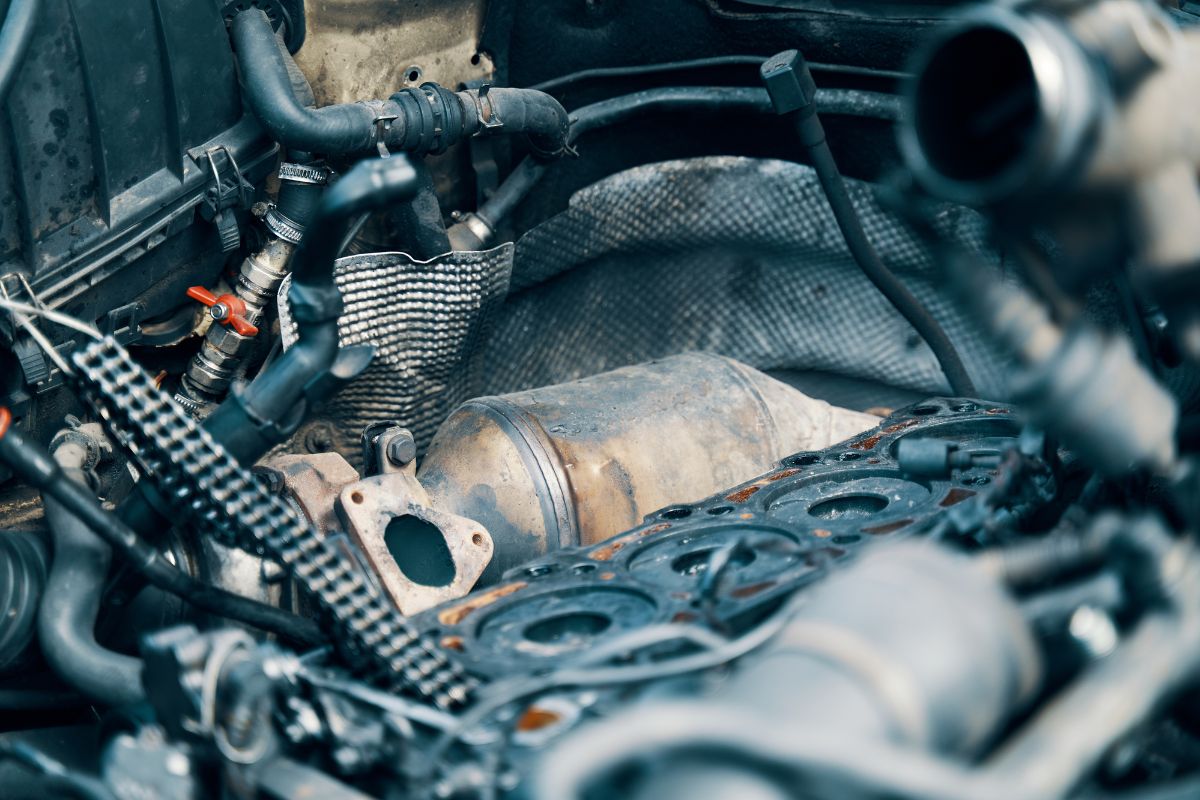
A DPF filter is a component of the exhaust system in diesel engines whose function is to retain and eliminate solid particles (soot) generated during combustion. It becomes clogged when these particles accumulate faster than the system can eliminate them through regeneration.
Below, Oxyhtech tells you everything you need to know about DPF filters and why they become clogged in vehicles.
What exactly is a DPF filter?
The DPF (Diesel Particulate Filter) is a ceramic filter installed in the exhaust that captures soot before it is released into the atmosphere, drastically reducing pollutant emissions.
The DPF is made of a porous structure (usually silicon carbide) that acts as a “trap” for solid particles. The gases pass through the filter, but the soot is retained. Over time, this soot must be removed through a process called regeneration, which burns the accumulated waste at high temperatures.
A modern diesel passenger car can reduce up to 90% of polluting particles thanks to the DPF. Without this system, it would not comply with current Euro regulations.
The DPF does not remove gases, it removes solid particles. For gases (NOx, CO), other systems such as EGR or the SCR catalyst are used.
What is the purpose of the DPF filter in a diesel car?
It serves to reduce environmental pollution and enable diesel vehicles to comply with European emissions standards.
The DPF has been mandatory in diesel vehicles since the Euro 5 standard. Without it:
- The car could not be approved.
- It would emit visible black smoke.
- It would not pass the MOT due to opacity.
In addition, the DPF plays a key role in low-emission zones (LEZ), as a filter in poor condition increases the vehicle’s actual emissions.
How does the DPF filter work?
The DPF traps soot and removes it through periodic regenerations that burn it at high temperatures.
Types of DPF regeneration
Passive regeneration
This occurs automatically when the car is traveling at a constant speed and the exhaust reaches high temperatures (on a highway or freeway).
Active regeneration
The control unit injects additional fuel to raise the temperature of the DPF when it detects excessive soot accumulation.
Forced regeneration
It is recommended to force regeneration of the particulate filter in the workshop using diagnostics when automatic regeneration has not been sufficient.
Example
A car that only drives in the city rarely reaches the conditions necessary for passive regeneration, so it depends almost exclusively on active regeneration… and that’s where the problems begin.
Why does the DPF filter become clogged?
The DPF becomes clogged when soot accumulates faster than it can be removed, usually due to urban use, driving at low revs, or problems with other engine systems.
Most common causes of clogging
- Short, urban journeys.
- Constant driving at low revs.
- Interrupted regenerations.
- Excess carbon deposits in the engine.
- EGR valve faults.
- Dirty or poorly sprayed injectors.
- Incorrect oil (high ash content).
What are the symptoms of a clogged DPF?
A clogged DPF causes loss of power, increased fuel consumption, and warnings on the instrument panel.
Most common symptoms
- DPF warning light on.
- Engine in emergency mode.
- High fuel consumption.
- Very frequent regenerations.
- Strong burning smell.
- Dark smoke from the exhaust.
- Noticeable loss of power.
Many drivers ignore these symptoms until the car can no longer regenerate, forcing them to take it to a repair shop.
What happens if I continue driving with a clogged DPF?
Continuing to drive with a clogged DPF can cause serious and costly breakdowns.
Common consequences
- Damage to the turbocharger due to overpressure.
- Oil contamination with diesel fuel.
- EGR failures.
- Breakage of the filter itself.
- Failure to pass MOT.
- Replacement of the DPF (very expensive).
When is it necessary to clean the DPF filter?
When the saturation level exceeds the vehicle’s automatic regeneration capacity.
Common cases
- The car enters emergency mode.
- The diagnosis shows high back pressure.
- Active regeneration is repeated constantly.
- A persistent DPF warning appears.
How do you clean a DPF filter correctly?
Professional DPF cleaning is the most effective alternative to replacement.
Oxyhtech professional machines
Specialized cleaning in the workshop
Specialized cleaning in the workshop using specific equipment removes accumulated soot and ash without damaging the filter.
- DPF Cleaner → preventive maintenance.
- DPF Cleaner Plus → highly saturated filters or failed regenerations.
These machines are designed to restore the capacity of the DPF and extend its service life.

How much does it cost to repair or replace a DPF filter?
Although cleaning a DPF is much cheaper than replacing it, the cost of a DPF depends on the type of vehicle, the level of clogging, and the service offered by each workshop, so there is no single or standard price.
That is why preventive maintenance and timely cleaning are key.
How can you prevent the particulate filter from becoming clogged again?
With good driving habits and regular maintenance.
Key recommendations
- Drive regularly on the highway at medium speed.
- Do not interrupt regenerations.
- Use approved low-SAPS oil.
- Keep EGR and injectors in good condition.
- Perform preventive cleaning of the DPF.
- Decarbonize the engine periodically.
Final summary: the essentials about the DPF filter
The DPF particulate filter is one of the elements that causes the most problems in today’s diesel engines. Detecting clogging early and having it professionally cleaned can prevent costly replacements, improve vehicle performance, and effectively reduce emissions.
- The DPF is essential for reducing emissions in diesel engines.
- It becomes clogged mainly due to urban use and poor combustion.
- Ignoring the symptoms can lead to serious breakdowns.
- Professional cleaning is the best alternative to replacement.
- Good maintenance avoids high costs and problems at the MOT.
For workshops, offering a specialized DPF diagnosis and cleaning service not only solves frequent breakdowns, but also becomes a profitable and recurring line of business.
At Oxyhtech, we provide workshops with specific solutions for DPF maintenance and cleaning, such as DPF Cleaner and DPF Cleaner Plus, as well as professional technology designed to work safely and deliver visible results.
Would you like to incorporate advanced DPF cleaning services into your workshop? Contact us and we will advise you, with no obligation, on the solution that best suits your workload and vehicle type.
Frequently asked questions about DPF filters
The cost of replacing a particulate filter varies depending on the vehicle, the type of engine, and the workshop itself, especially in commercial vehicles or trucks. There is no standard price, as it depends on the size of the filter, the approval, the labor, and the necessary reprogramming. For this reason, professional cleaning is usually the first technical option before considering replacement.
The most common symptoms are loss of power, increased fuel consumption, the DPF warning light coming on, and frequent or failed regenerations. There may also be jerking, a burning smell, and the vehicle going into emergency mode. Early diagnosis prevents collateral damage to the turbo and EGR.
The particulate filter becomes clogged mainly due to urban use, short journeys, and driving at low revs. These habits prevent the system from reaching the temperature necessary to regenerate the DPF correctly. An engine with excess carbon deposits accelerates the clogging of the filter.