
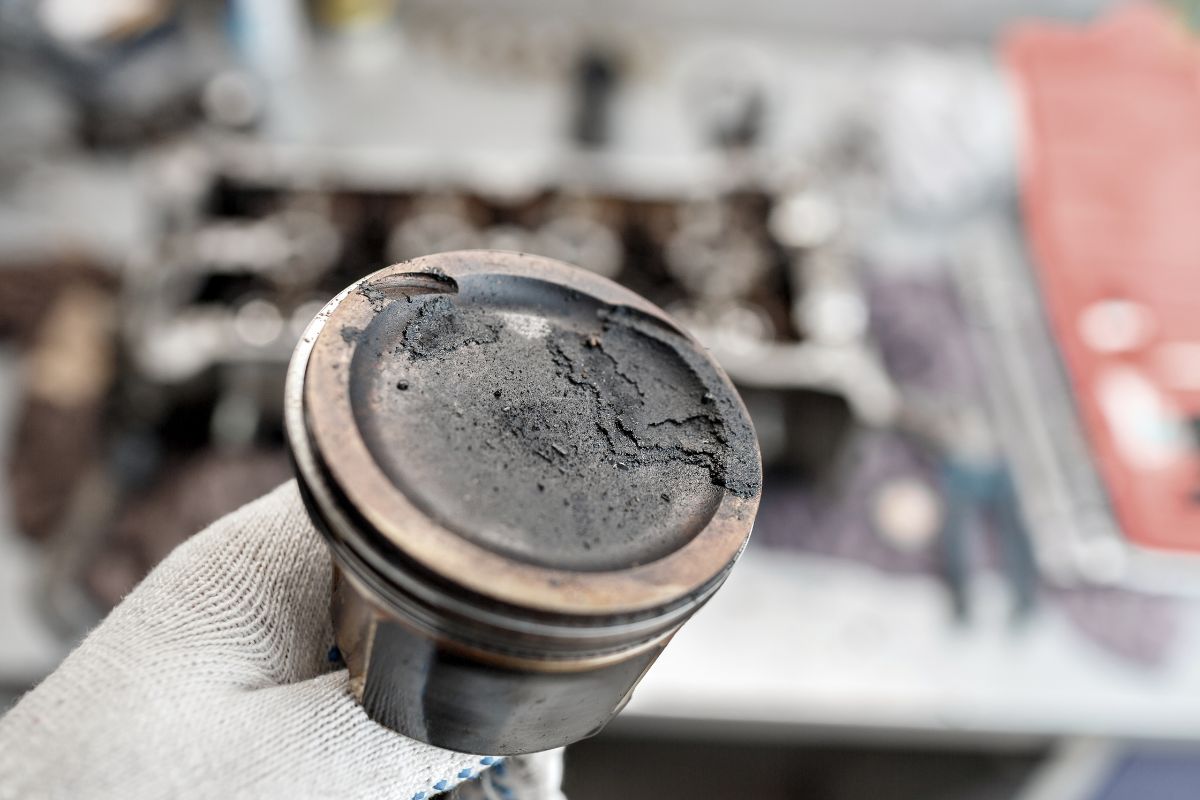
A particulate filter (DPF) can be cleaned several times throughout its useful life, provided its internal structure is not damaged. Under normal conditions, a DPF can withstand between 2 and 5 professional cleanings, depending on the level of accumulated ash and vehicle use. For workshops, knowing when a filter is recoverable and when it is not makes the difference between a profitable repair and an unnecessary replacement.
What is the DPF and how does it work?
The DPF (Particulate Filter) is an exhaust system that retains the contaminant particles generated by diesel engine combustion.
The filter accumulates soot internally and eliminates it through a process called regeneration, which burns these particles at high temperature.
Over time, in addition to soot, ash also accumulates that is not removed by regeneration, limiting the filter’s service life.
Why does the DPF become saturated and how to prevent it?
The DPF becomes saturated when it cannot correctly eliminate the accumulated particles.
Why can it become saturated?
- constant urban driving
- short trips
- interrupted regenerations
- EGR or injector failures
- use of incorrect oil
These factors prevent the system from reaching the temperature needed to clean itself.
Most common signs
- power loss
- DPF warning light on
- increased fuel consumption
- frequent regenerations
- exhaust smoke
In the workshop, the most reliable method is to measure differential pressure of the DPF.
Why is it important to prevent DPF saturation?
Preventing DPF saturation reduces the risk of serious breakdowns.
When the filter clogs:
- back pressure increases
- engine loses performance
- other components get damaged
The earlier the intervention, the easier it is to recover the filter.
How to clean the particulate filter?
There are different ways to clean a DPF depending on the saturation level.
Step 1: Identify signs of a clogged particulate filter
Detecting saturation early is key to being able to clean the filter.
- power loss
- DPF warning light on
- increased fuel consumption
- frequent regenerations
- exhaust smoke
In the workshop, the most reliable method is to measure differential pressure of the DPF.
Step 2: Choose a DPF cleaner
Choosing the correct method depends on the actual condition of the filter, but it is important to understand that not all methods have the same effectiveness.
- mild → decarbonization or DPF additive
- medium → cleaning with DPF machine or support with decarbonization
- high → complete professional cleaning
In mild and medium states, decarbonization helps improve combustion and facilitates system regeneration, preventing the filter from continuing to saturate.
In medium states, cleaning with a DPF machine is the most effective option to prevent the problem from progressing.
What does the machine do that regeneration does not?
| Function | Regeneration |
| Removes soot | YES |
| Removes ash | NO |
| Removes oil/wax | NO |
| Long-lasting result | Temporary |
The key difference is that regeneration only acts on soot, while professional cleaning removes all accumulated residues from the filter.
Step 3: Refuel
In the case of additive use:
- they are added to the fuel
- they facilitate soot combustion
- they require a full refuel
At this point, it is important to use specific products such as
At this point, it is important to use specific products such as Oxyhtech DPF additives, designed to improve combustion and help keep the system clean during preventive phases.
Step 4: Drive the vehicle
After applying the treatment:
- drive at constant speed
- maintain medium-high revs
- allow the system to regenerate
This process is necessary when using additives or decarbonization, as it allows the system to reach the appropriate temperature to eliminate soot. In the case of professional cleaning with a DPF machine, this step is not necessary as the filter is cleaned outside the vehicle.
Step 5: Repeat if necessary
In some cases, the process must be repeated. If it does not work after several attempts, the filter most likely requires
In some cases, the process must be repeated. If it does not work after several attempts, the filter most likely requires professional cleaning.
How many times can a DPF really be cleaned?
Cleaning capacity depends on several factors:
- amount of accumulated ash
- condition of internal structure
- type of vehicle use
Reference values
| DPF condition | Possible cleanings | Recommendation |
| Low urban use | 3–5 times | Preventive cleaning |
| Mixed use | 2–4 times | Periodic cleaning |
| Intensive urban use | 1–3 times | Frequent professional cleaning |
How to prevent the DPF from saturating and extend its service life?
Prevention is the best strategy.
- take long trips regularly
- avoid turning off the car during regeneration
- use appropriate oil
- check injection system
- carry out preventive maintenance
Furthermore, in workshops, offering preventive cleaning helps extend filter service life and improve customer satisfaction.
DPF cleaning with Oxyhtech
DPF cleaning is a viable and profitable solution as long as it is performed at the right time and with the correct method. Knowing how many times a filter can be cleaned allows optimization of repairs and avoidance of unnecessary replacements. When the saturation level is high, having professional solutions such as Oxyhtech DPF cleaning machines allows filter recovery, better results, and increased workshop profitability.
Would you like to offer a professional DPF cleaning service in your workshop? Contact us and we will advise you.
Frequently Asked Questions
It can be detected by power loss, warning light on, or increased fuel consumption. In the workshop, the most reliable method is to measure differential pressure and analyze regenerations. If values are high, the filter is saturated.
The cost depends on the type of vehicle, the saturation level, and the method used. There is no standard price, but it is usually significantly more economical than replacing the entire filter.
A dirty air filter causes power loss, higher fuel consumption, and poor combustion. Although it is not the DPF, it can indirectly influence its saturation by generating more particles.
During regeneration, it is usually necessary to drive for between 15 and 30 minutes at constant speed. However, this only works at low saturation levels.