
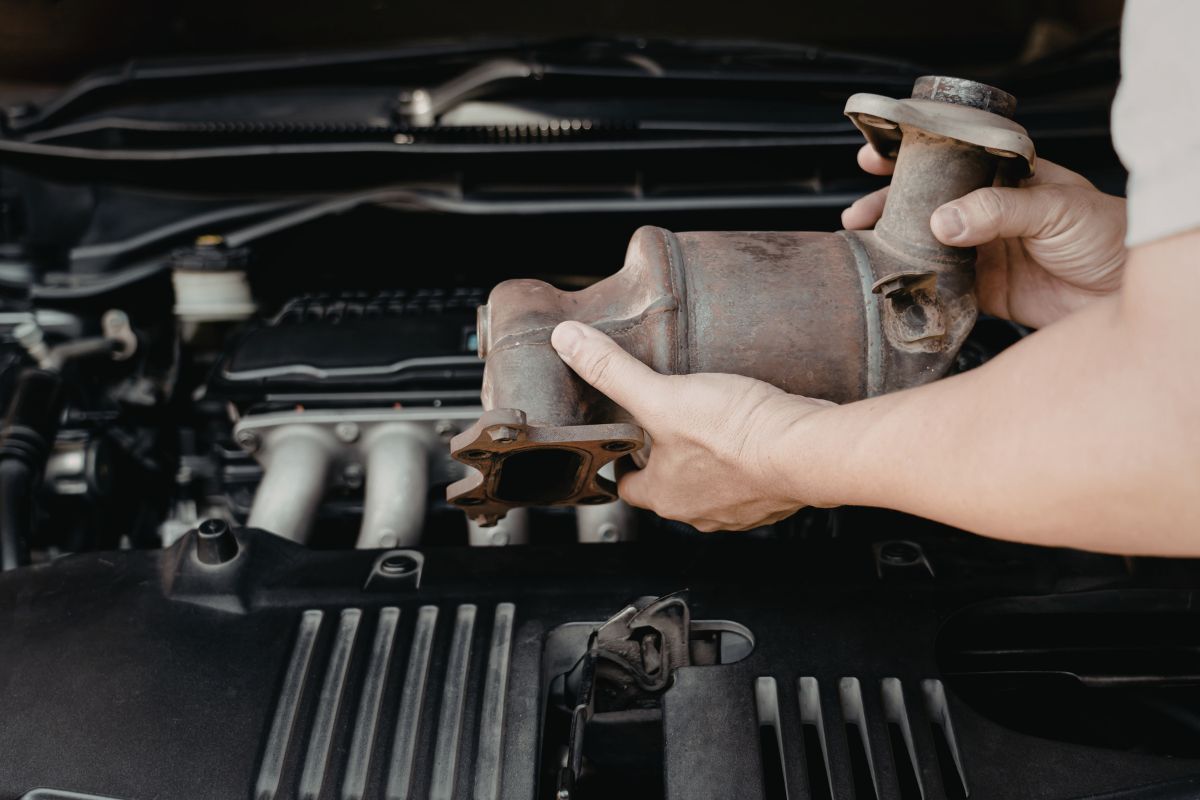
Yes, in most cases, it is worth cleaning exhaust filter before replacing it. When the DPF is clogged with soot or ash buildup, proper cleaning can restore its performance and avoid the high cost of replacing the filter.
For repair shops, correctly diagnosing the filter’s condition and choosing the right cleaning method is key to offering an effective and cost-efficient solution to the customer.
What is a particulate filter and why does it get dirty?
The diesel particulate filter (DPF or FAP) is a component of the exhaust system designed to trap solid particles generated during engine combustion.
Its main function is to reduce pollutant emissions and comply with environmental regulations.
How the filter gets clogged
The filter accumulates:
- Soot from combustion.
- Ash generated by engine oil.
- Residues from incomplete combustion.
These particles are stored within the filter’s ceramic structure until they are removed through the regeneration process.
If regeneration does not occur properly, the filter eventually becomes saturated.
When did particulate filters become widespread?
Particulate filters began to be widely incorporated into diesel vehicles starting with the Euro 5 standard (2009).
Since then, they have become a mandatory component to meet emissions limits.
This explains why, in recent years, repair shops have been receiving an increasing number of vehicles with DPF-related issues.
Causes of clogged particulate filters
Filter clogging usually occurs when the system cannot properly remove accumulated particles.
- Primarily urban driving.
- Short trips.
- Interrupted regenerations.
- Problems with the EGR valve.
- Faulty injectors.
- Use of incorrect oil.
- System sensor failures.
Identifying the actual cause is essential before deciding whether the filter should be cleaned or replaced.
What happens if the particulate filter is clogged?
When the filter is clogged, the exhaust system generates higher backpressure, which directly affects engine performance.
- Loss of power.
- Increased fuel consumption.
- Emergency mode activation.
- Constant regenerations.
- DPF warning light comes on.
If the problem is not resolved in time, more serious malfunctions may occur in components such as the turbocharger or the EGR valve.
Particulate Filter: Should You Clean It or Replace It?
In many cases, cleaning exhaust filter is the best option as long as the DPF isn’t structurally damaged.
Replacement is usually necessary only when:
- The filter is cracked.
- The ceramic structure is damaged.
- There is internal melting of the filter material.
On the other hand, if the problem is particle buildup, cleaning can restore its function.
Experts advise against cleaning exhaust filter
There is some controversy regarding the cleaning exhaust filter.
Some experts advise against certain methods because they can:
- Damage the filter’s internal structure.
- Leave residue inside.
- Fail to completely remove accumulated ash.
That is why it is important to distinguish between ineffective cleaning methods and proper professional cleaning methods like those we offer at Oxyhtech.
Particulate Filter Cleaning Methods
There are different methods for attempting to recover a saturated DPF.
Forced regeneration on the road
This method involves driving the vehicle for a period of time at higher RPMs to increase the exhaust temperature. This burns off the accumulated particles. However, this method is only effective when the filter is not yet too saturated.
Cleaning with specific additives
Some products are added to the fuel to facilitate the combustion of soot. These additives can help in mild cases, but they are not usually effective when the filter is already heavily clogged.
Cleaning with a diagnostic machine
At a repair shop, forced regeneration can be performed using diagnostic equipment. The vehicle’s system increases the exhaust temperature to remove the particles. This method requires technical supervision and only works if the level of saturation is not extreme.
Ultrasonic cleaning
Some repair shops use ultrasonic systems to remove residue from the filter. This method can help dislodge accumulated particles, although it does not always completely remove the ash.
Washing with detergent and pressurized water
This method involves washing the filter with water and detergent. Although it can remove some of the soot, it also poses risks:
- Damage to the internal structure.
- Incomplete removal of residue.
- Possible deterioration of the filter material.
Professional cleaning exhaust filter
Professional cleaning using specialized equipment is one of the most effective methods for restoring a saturated filter.
These systems allow you to:
- Restore gas flow.
- Remove soot and ash buildup.
- Check the condition of the filter before and after cleaning.
For many repair shops, this type of cleaning has become an increasingly in-demand service.
How much does it cost to replace the particulate filter?
The cost of replacing the DPF can vary considerably depending on:
- The vehicle model.
- The size of the filter.
- Whether it is a passenger car or a commercial vehicle.
For this reason, many customers look for alternatives before replacing it, such as cleaning the filter.
Consequences of not cleaning the filter in time
Ignoring a clogged particulate filter can lead to significant mechanical problems.
- Damage to the turbocharger.
- Overheating of the exhaust system.
- Increased fuel consumption.
- Contamination of the engine oil.
- Failures in the regeneration system.
The longer you drive with a clogged DPF, the greater the risk of breakdowns.
How to extend the life of the particulate filter
Proper maintenance can significantly extend the filter’s lifespan.
- Take long trips periodically.
- Use oil approved for DPF.
- Avoid turning off the engine during regeneration cycles.
- Check the EGR and fuel injectors.
- Perform preventive cleanings when necessary.
An increasingly important service for repair shops
Problems related to the diesel particulate filter are becoming increasingly common in modern diesel engines. Knowing when it’s worth cleaning exhaust filter and using the right method helps avoid unnecessary replacements and provides effective solutions for customers.
At Oxyhtech, we help workshops implement professional solutions for cleaning exhaust filter using equipment specifically designed for this type of work.
Would you like to introduce or improve your workshop’s DPF cleaning service? Contact us and we’ll help you choose the best solution for your business.
Frequently Asked Questions
Regeneration typically takes between15 and 30 minutes, depending on the vehicle and engine temperature.
The most common symptoms include:
> Loss of power.
> Increased fuel consumption.
> DPF warning light on.
> Frequent regenerations.
> Dark smoke from the exhaust.
The most reliable way is through a workshop diagnosis, checking:
> Filter differential pressure.
> Regeneration frequency.
> System error codes.